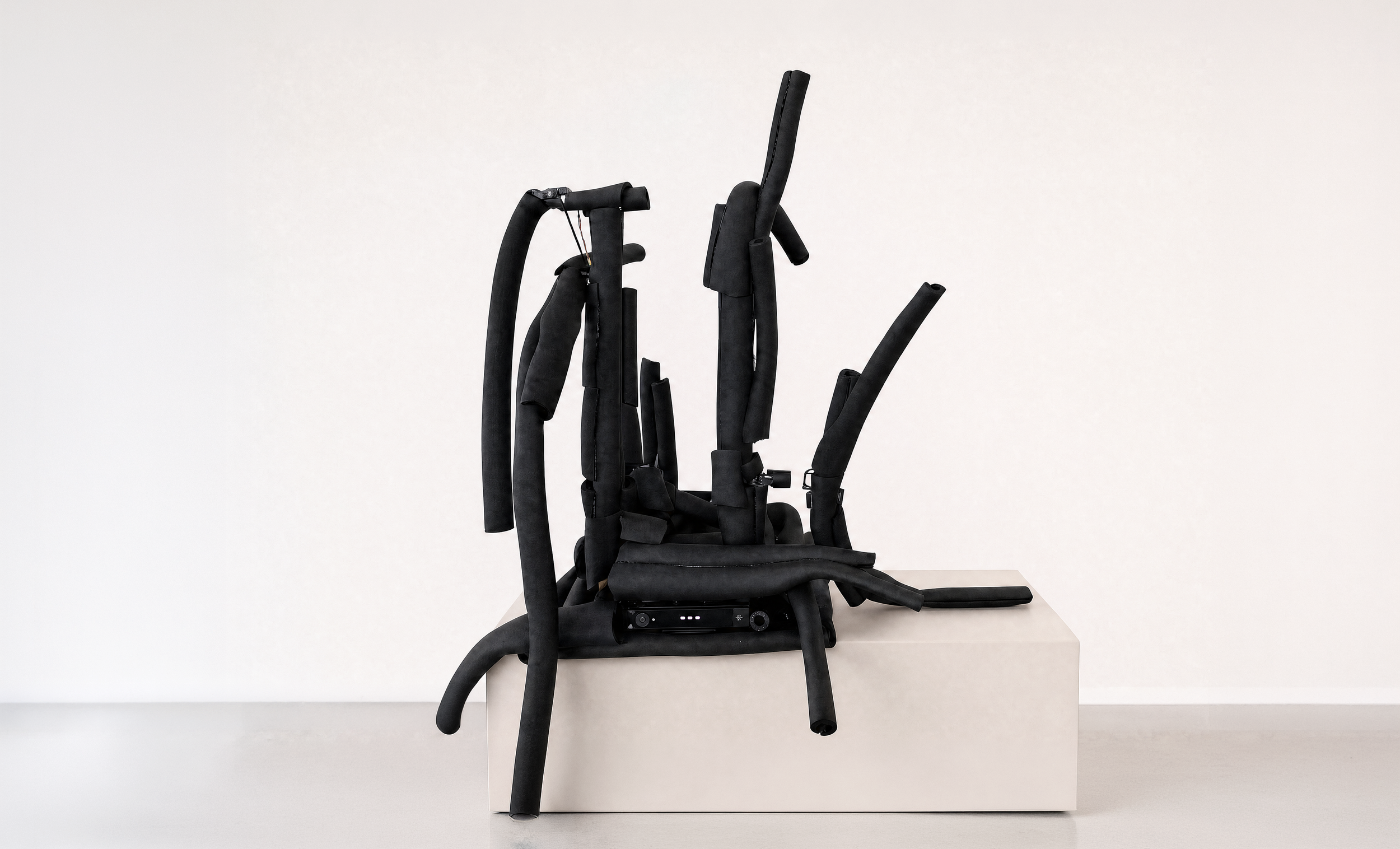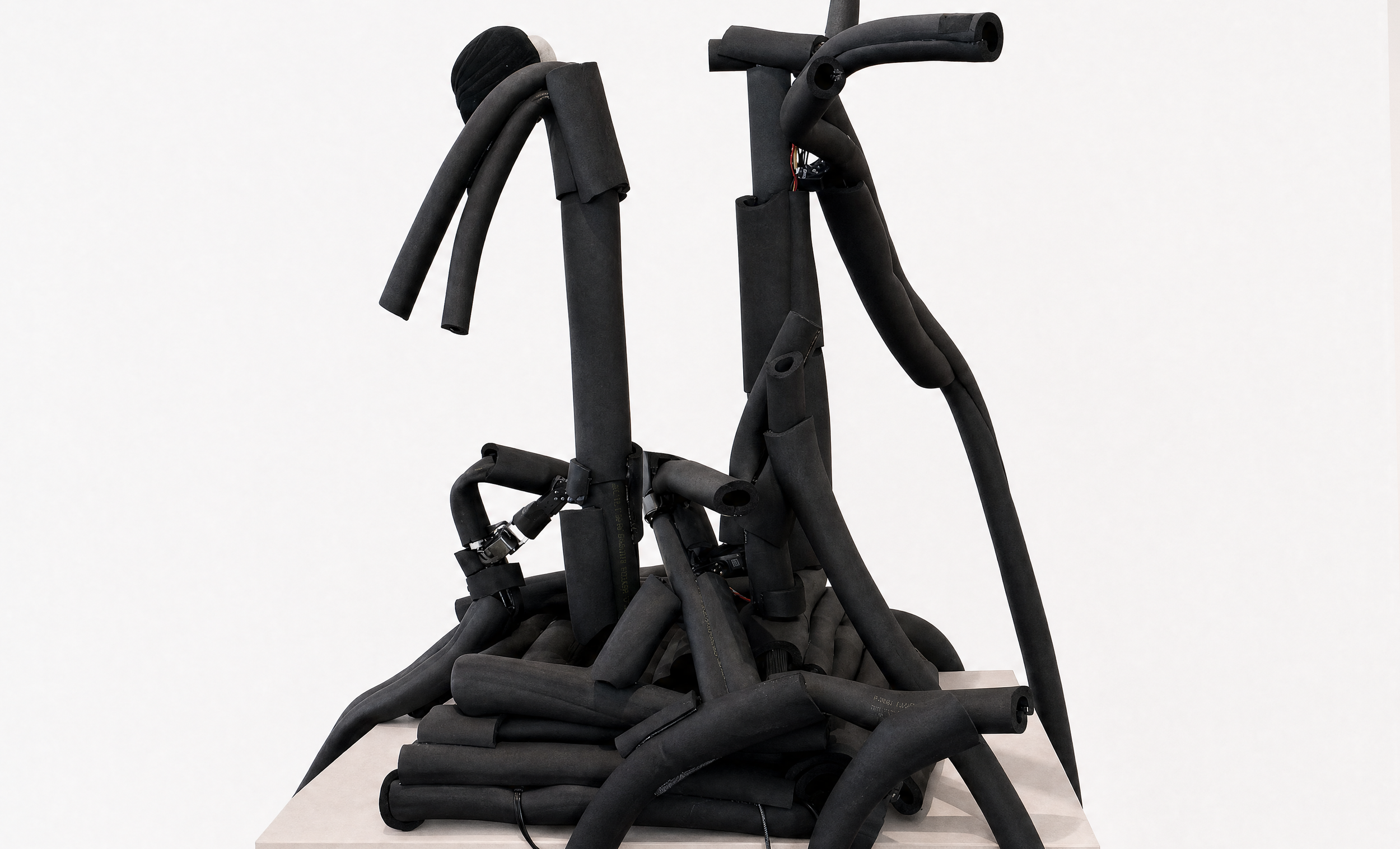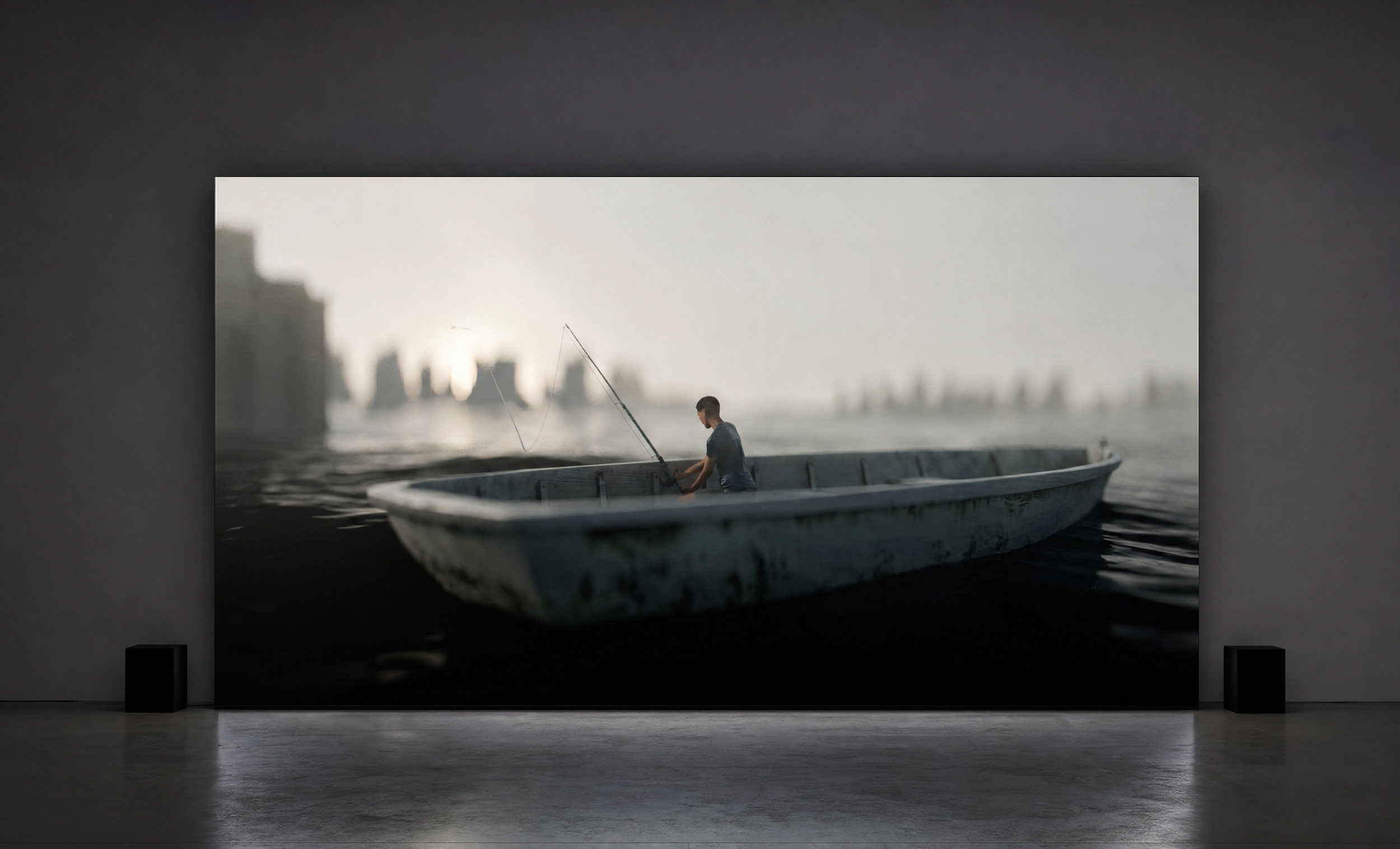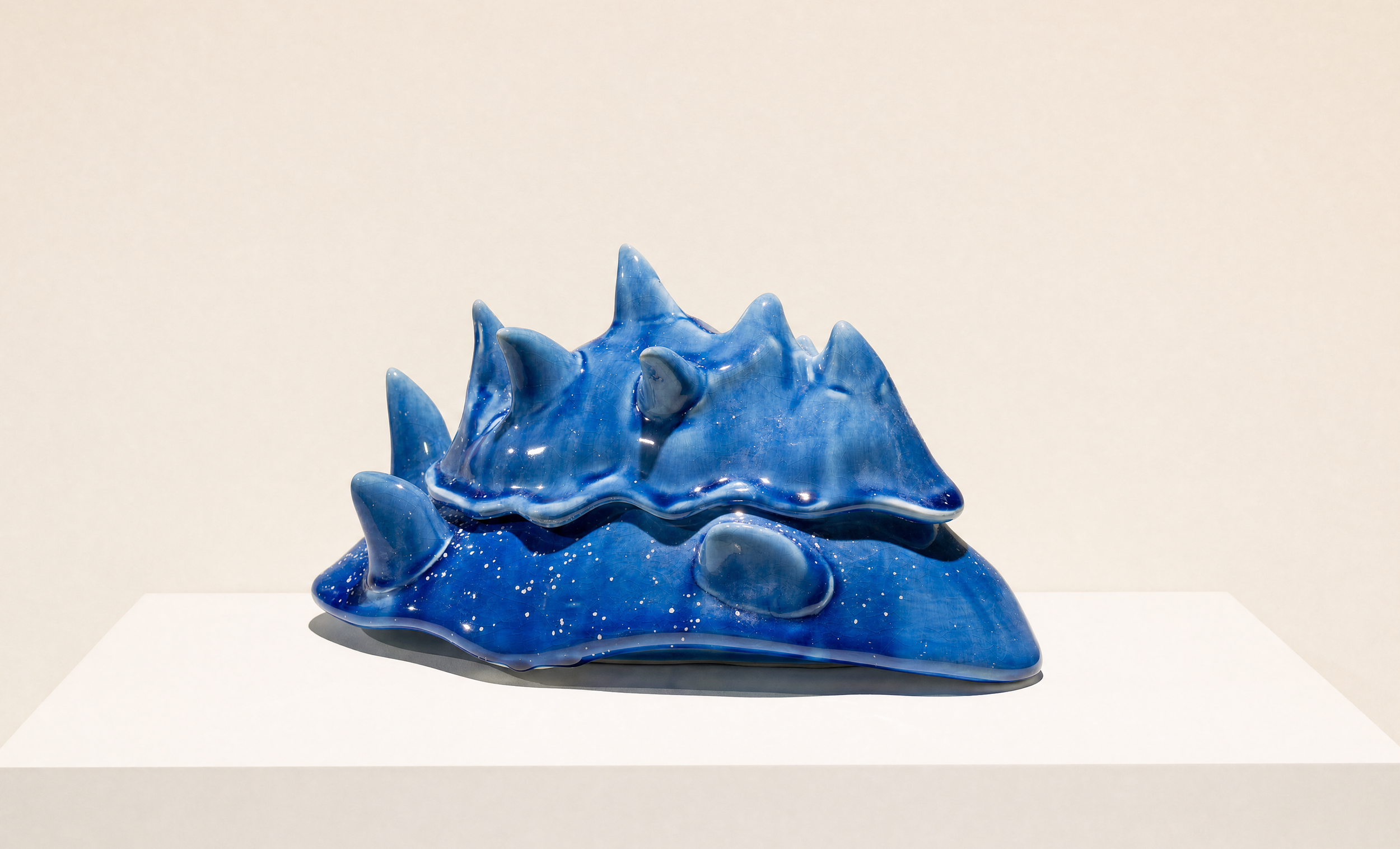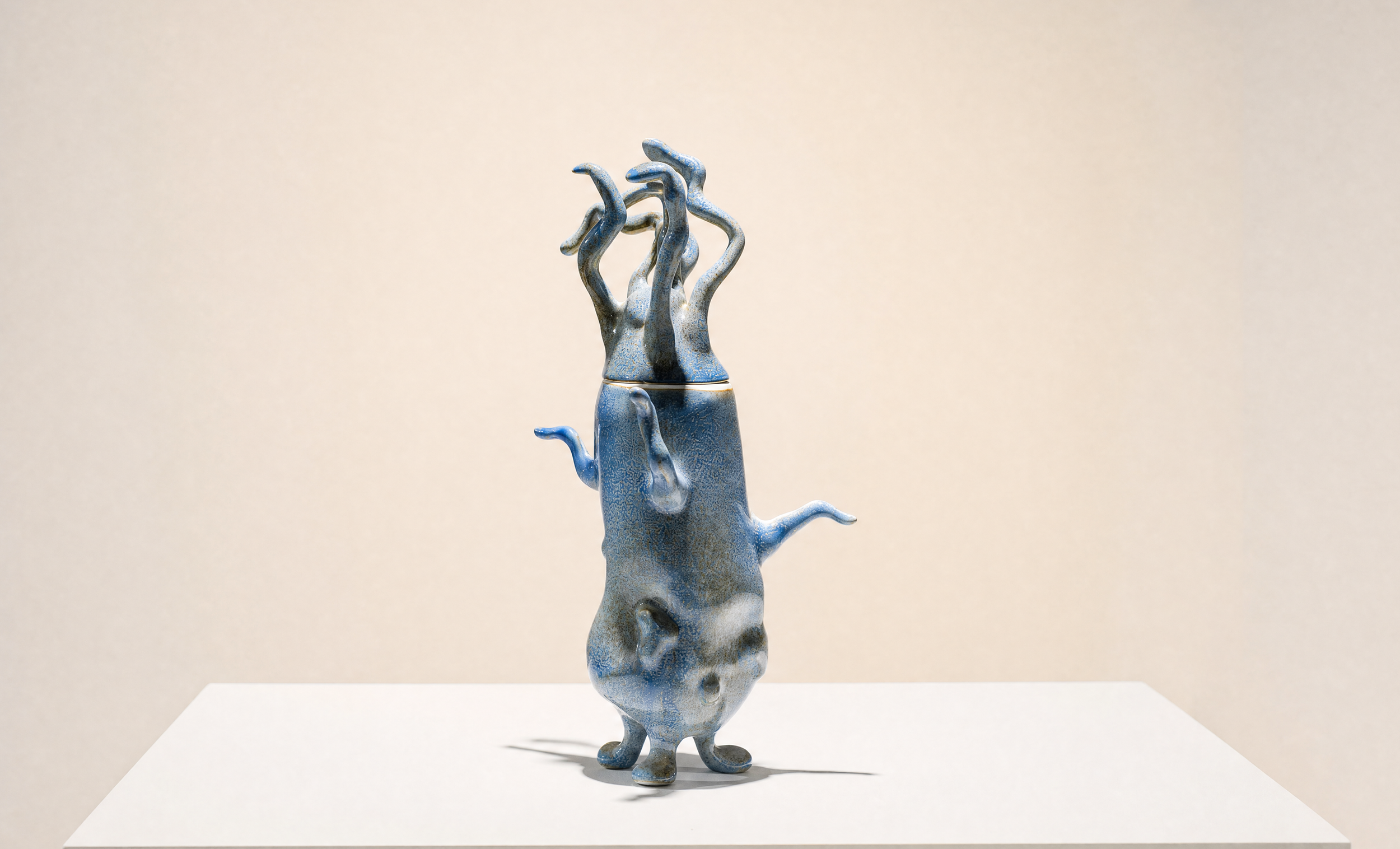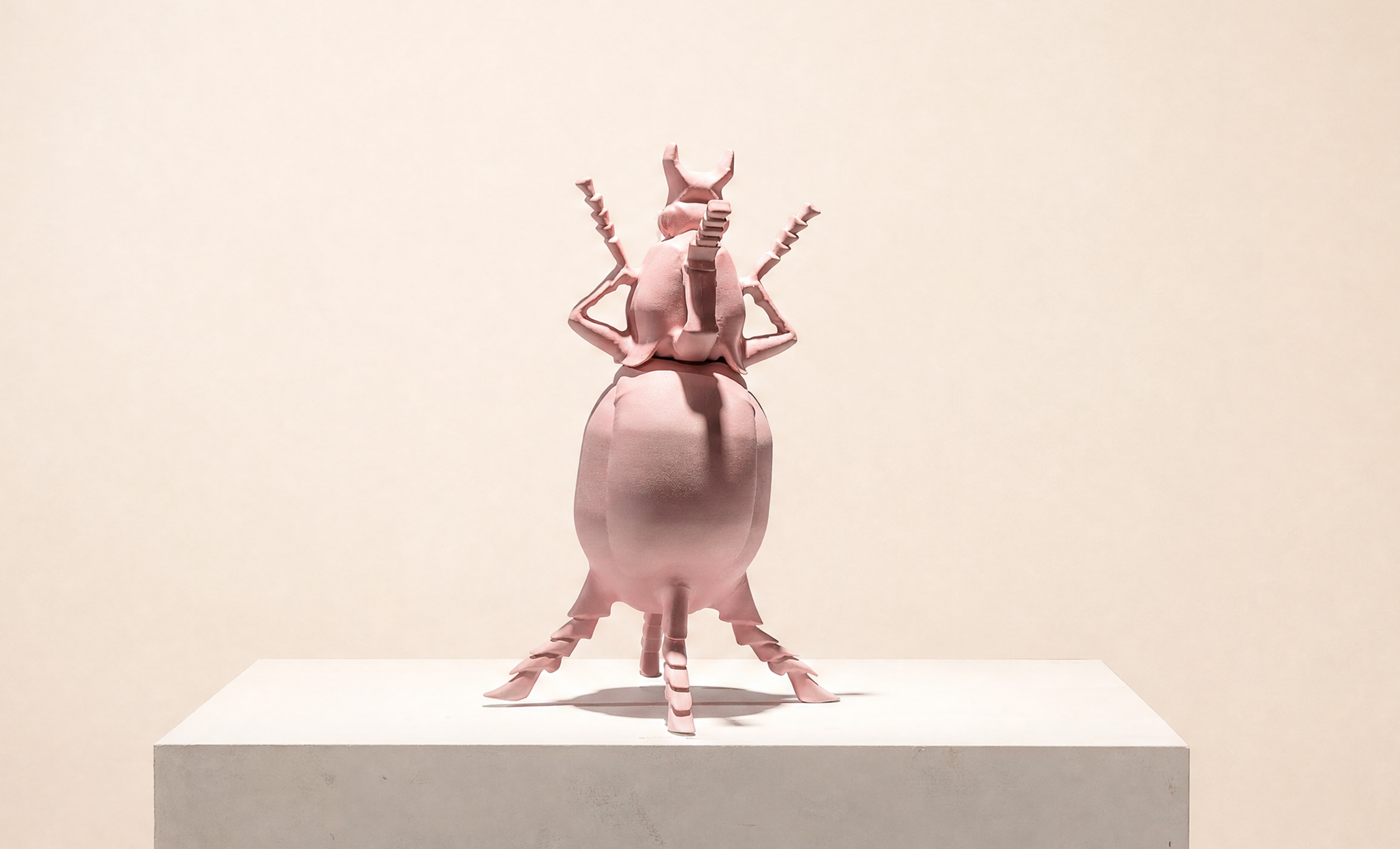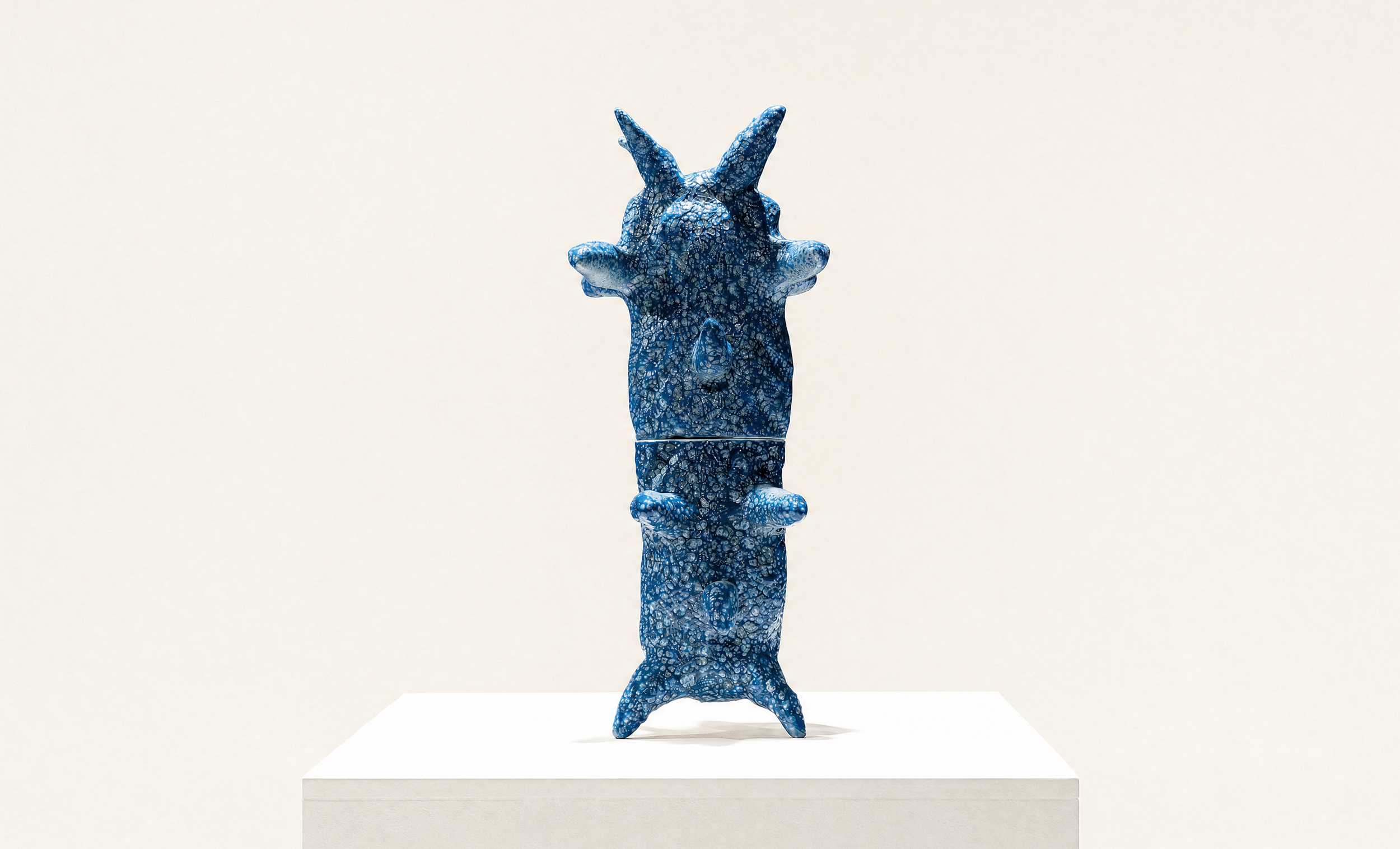
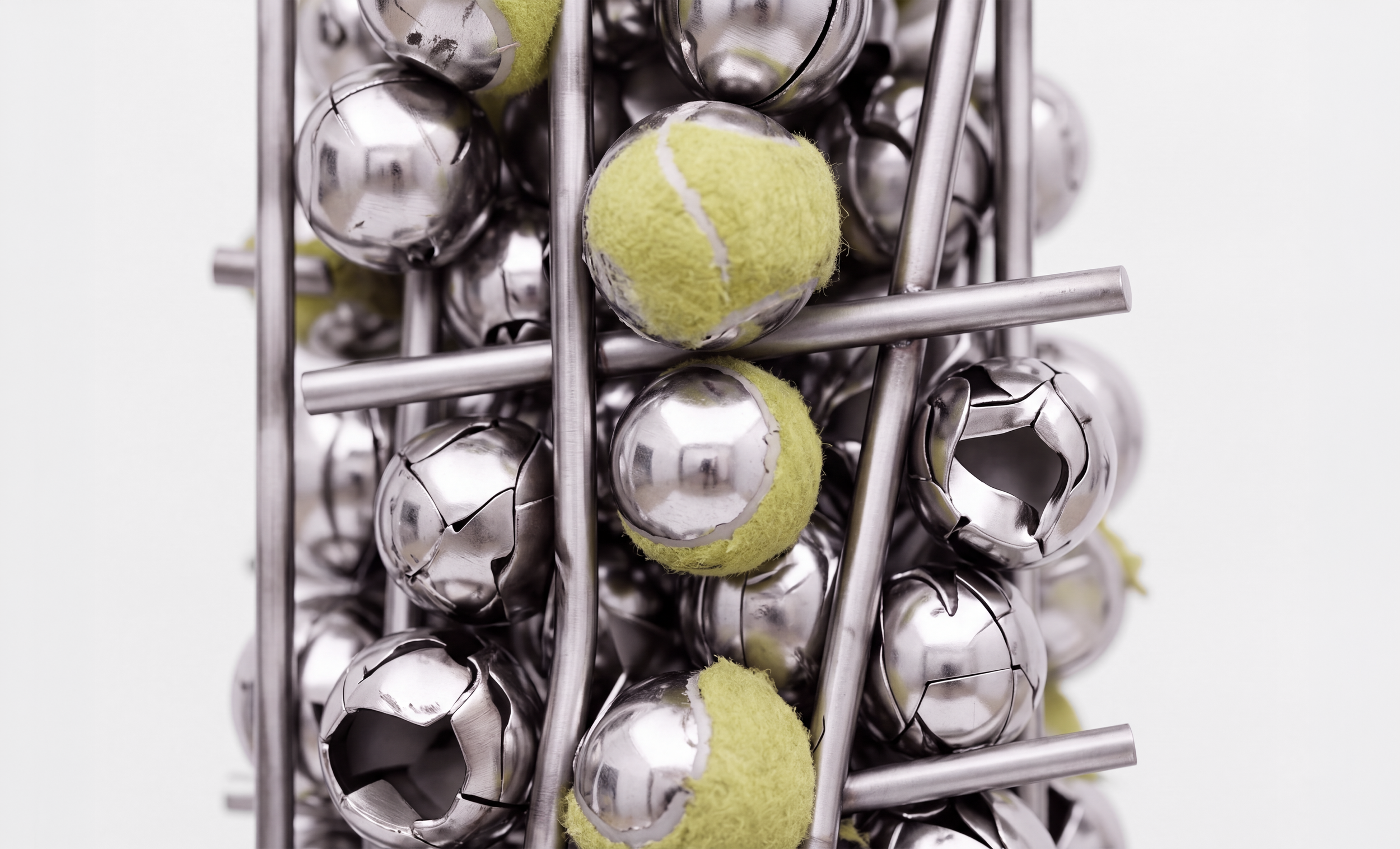
Nonexistent Memories: Peace, 2026, archival pigment print mounted to Dibond and framed, 30 x 50 inches, edition of 5 + 2 AP
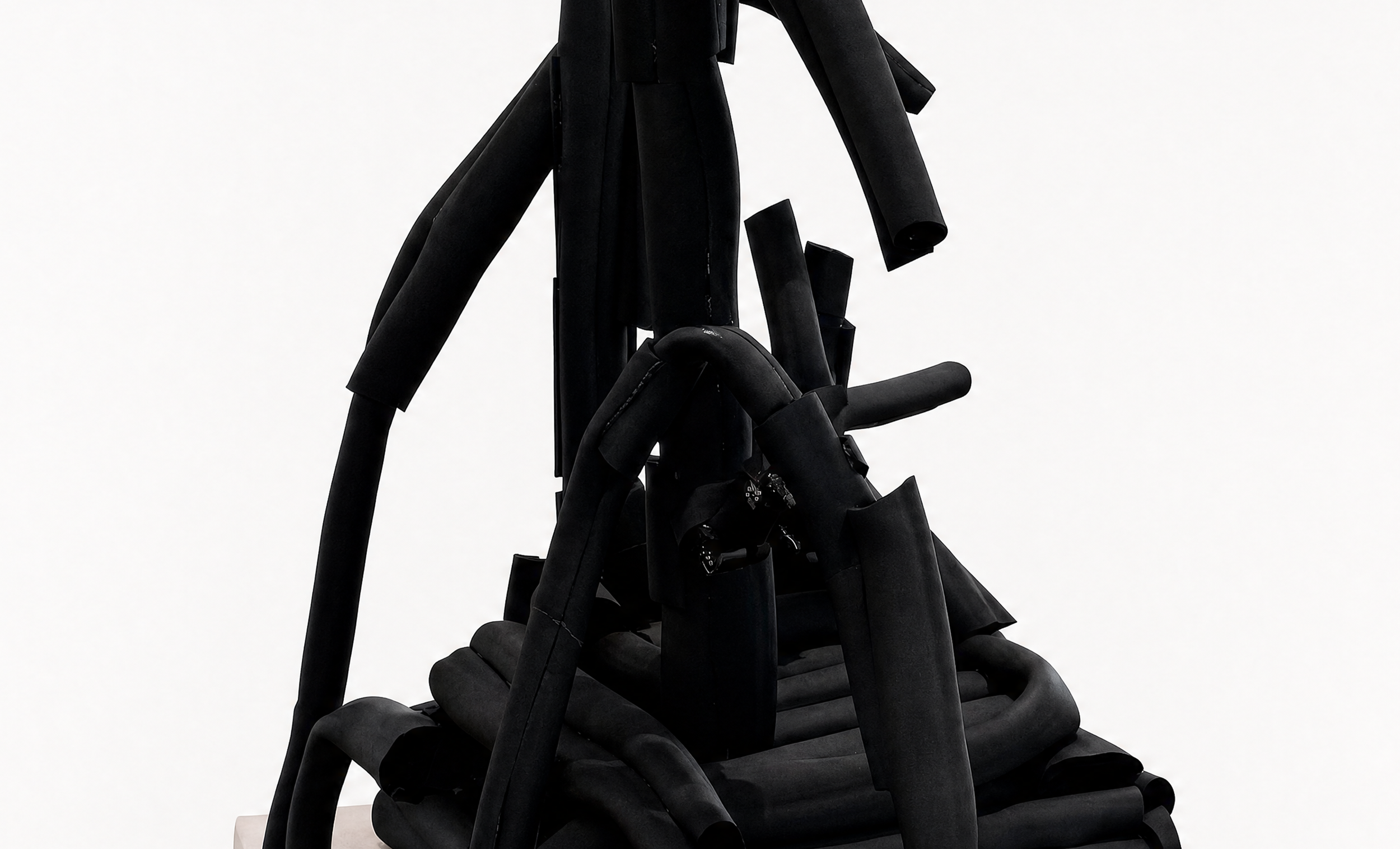
Nonexistent Memories: Misery, 2026, archival pigment print mounted to Dibond and framed, 30 x 50 inches, edition of 5 + 2 AP
Nonexistent Memories: Diversion, 2026, archival pigment print mounted to Dibond and framed, 28 × 40 inches, edition of 5 + 2 AP
Nonexistent Memories: Suffocation, 2026, archival pigment print mounted to Dibond and framed, 40 × 28 inches, edition of 5 + 2 AP
Nonexistent Memories: Fault, 2026, archival pigment print mounted to Dibond and framed, 28 × 40 inches, edition of 5 + 2 AP
Untitled Hallucination: Void #1, 2026, archival pigment print mounted to Dibond and framed, 30 x 50 inches, edition of 5 + 2 AP
Untitled Hallucination: Void #2, 2026, archival pigment print mounted to Dibond and framed, 30 x 50 inches, edition of 5 + 2 AP
Untitled Hallucination: Void #3, 2026, archival pigment print mounted to Dibond and framed, 30 x 50 inches, edition of 5 + 2 AP
Untitled Hallucination: Gold Prairie, 2026, archival pigment print mounted to Dibond and framed, 28 × 40 inches, edition of 5 + 2 AP
Nonexistent Memories
Some memories never become records. They remain attached to objects that were present when something happened, even when nothing was photographed or archived.
This series begins with objects and materials I remember from childhood. Their importance was not only in what they held, but in the way they gathered family attention, secrecy, and care. They belong to a part of family memory that was lived with, but never properly documented. They are intimate and uncertain: reminders of care, value, and protection that cannot return the moments they came from.
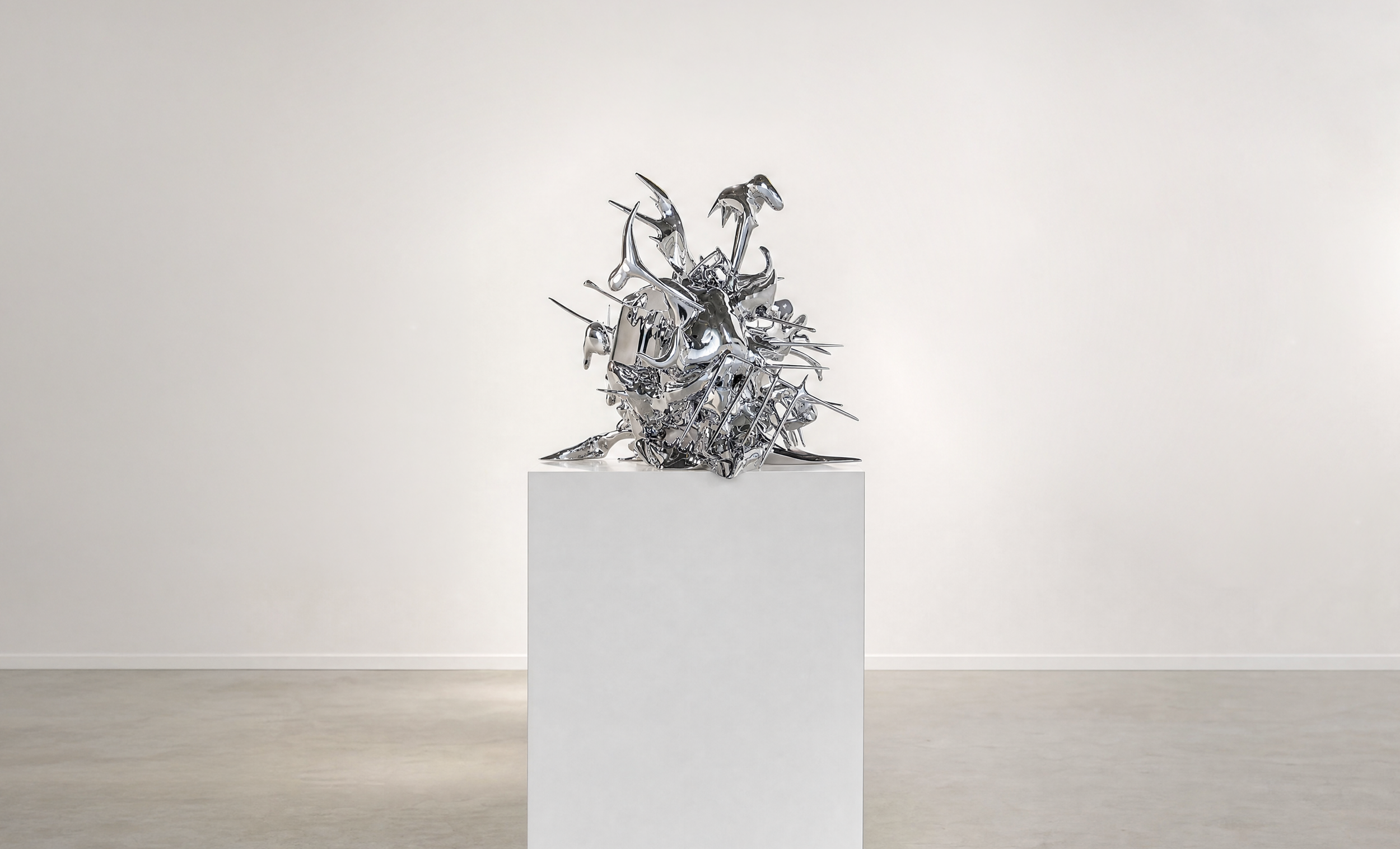
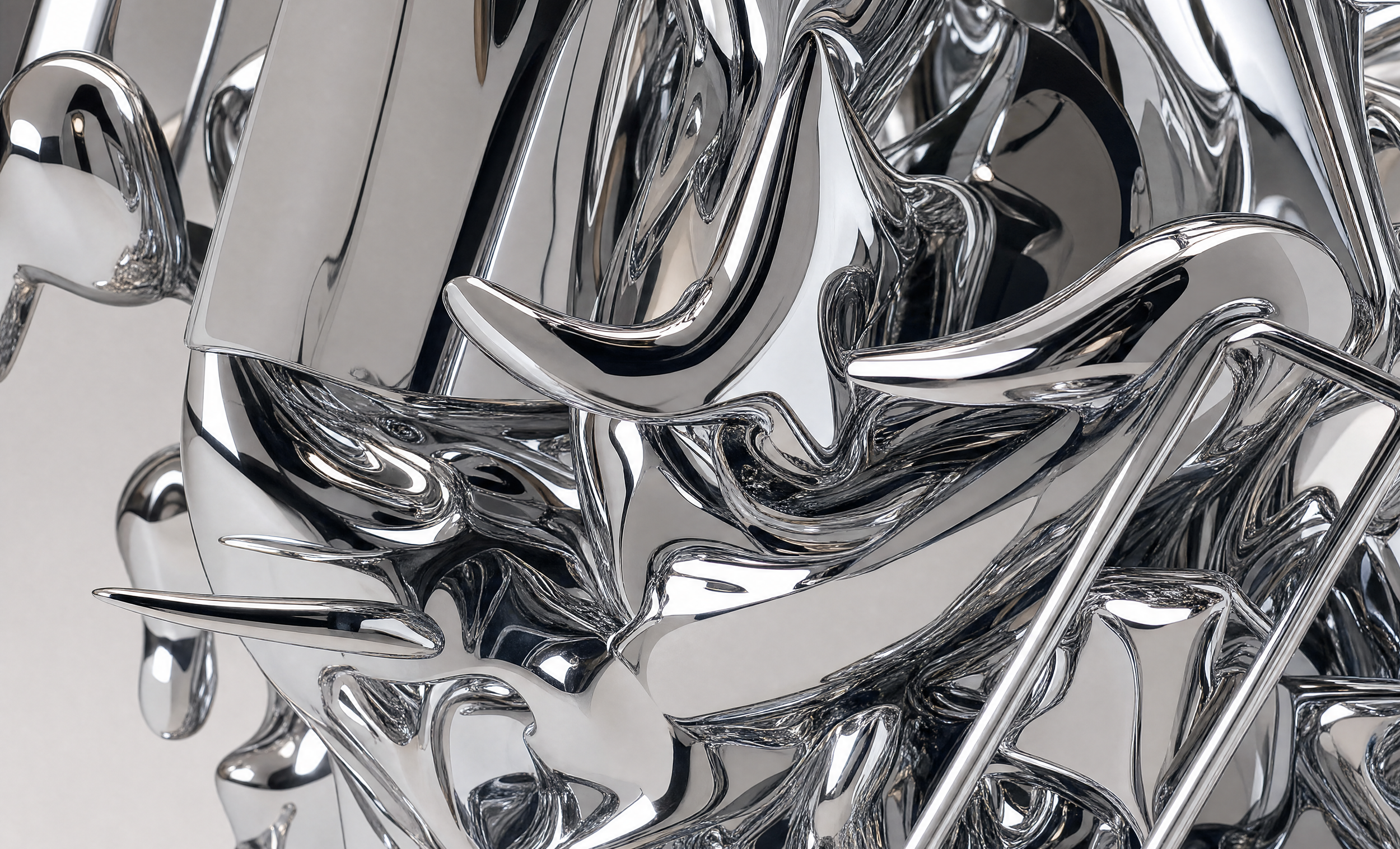
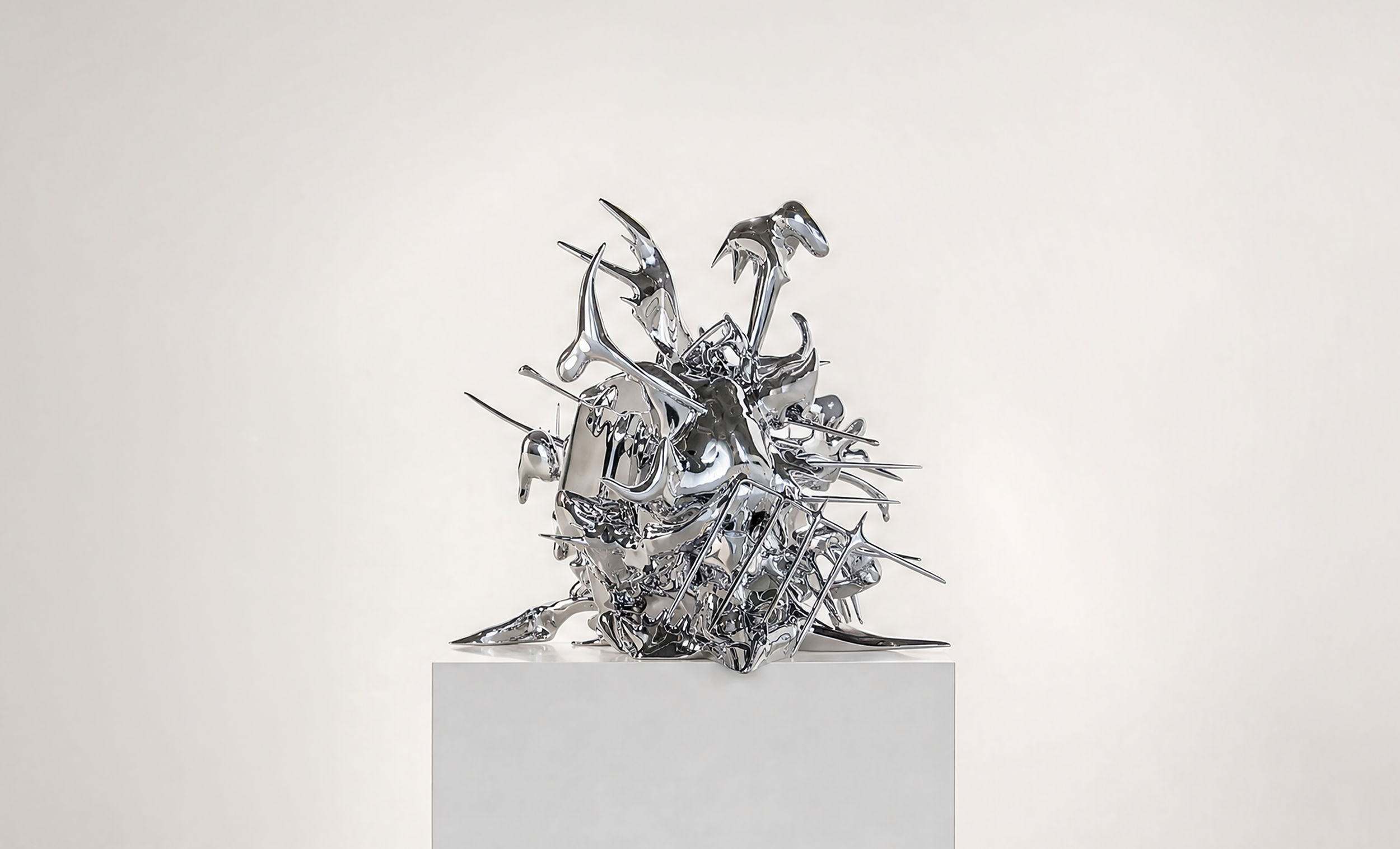
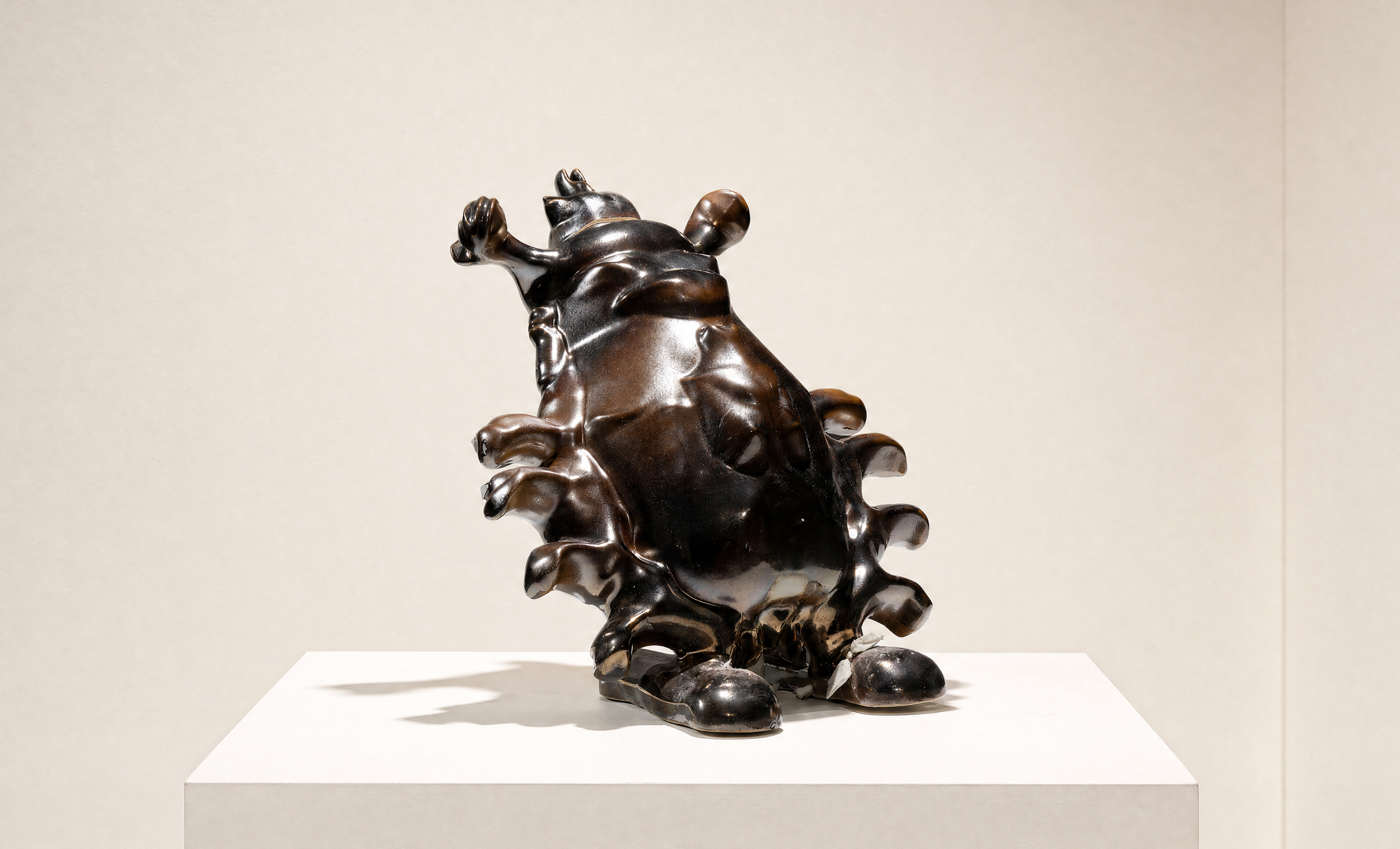
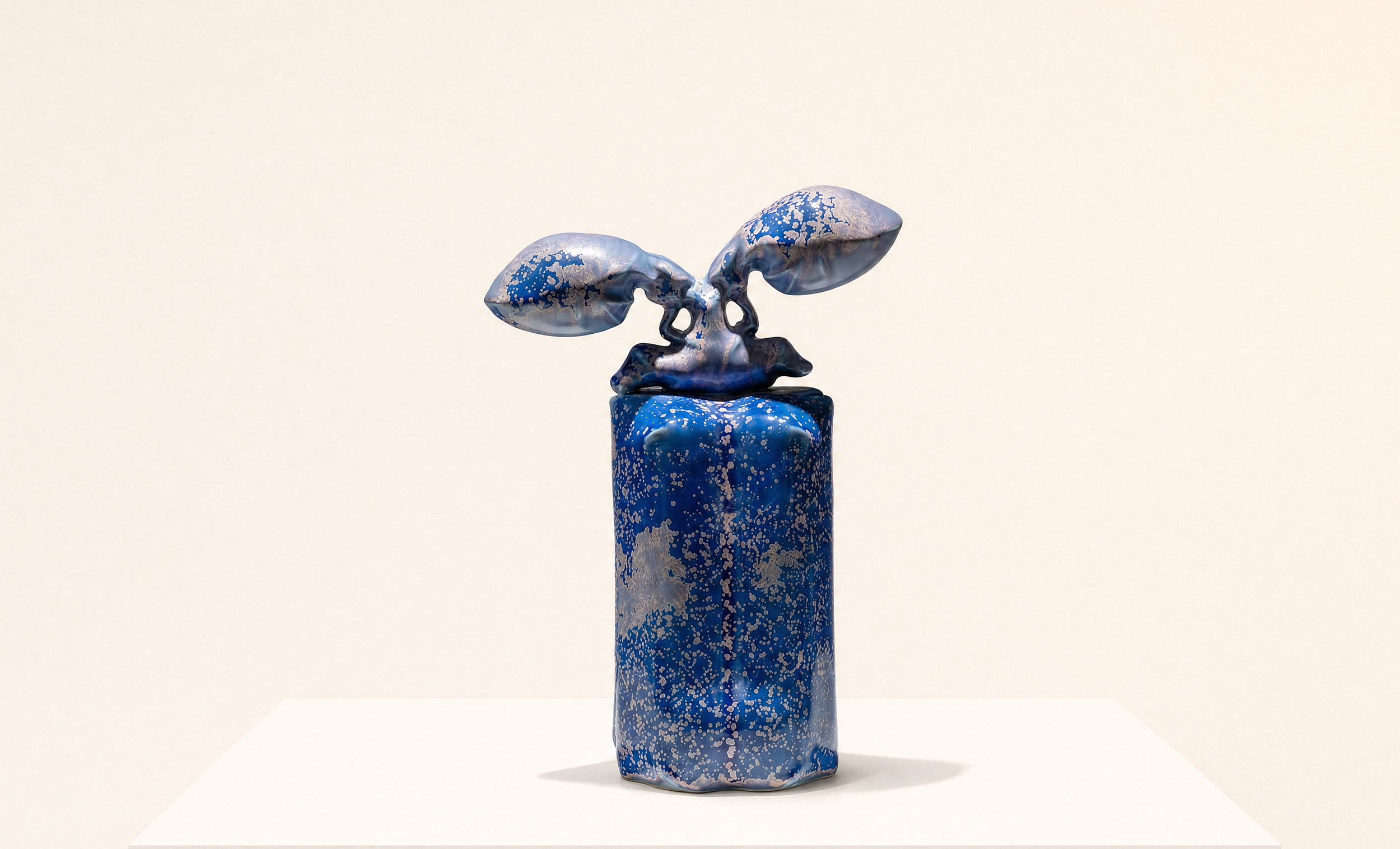
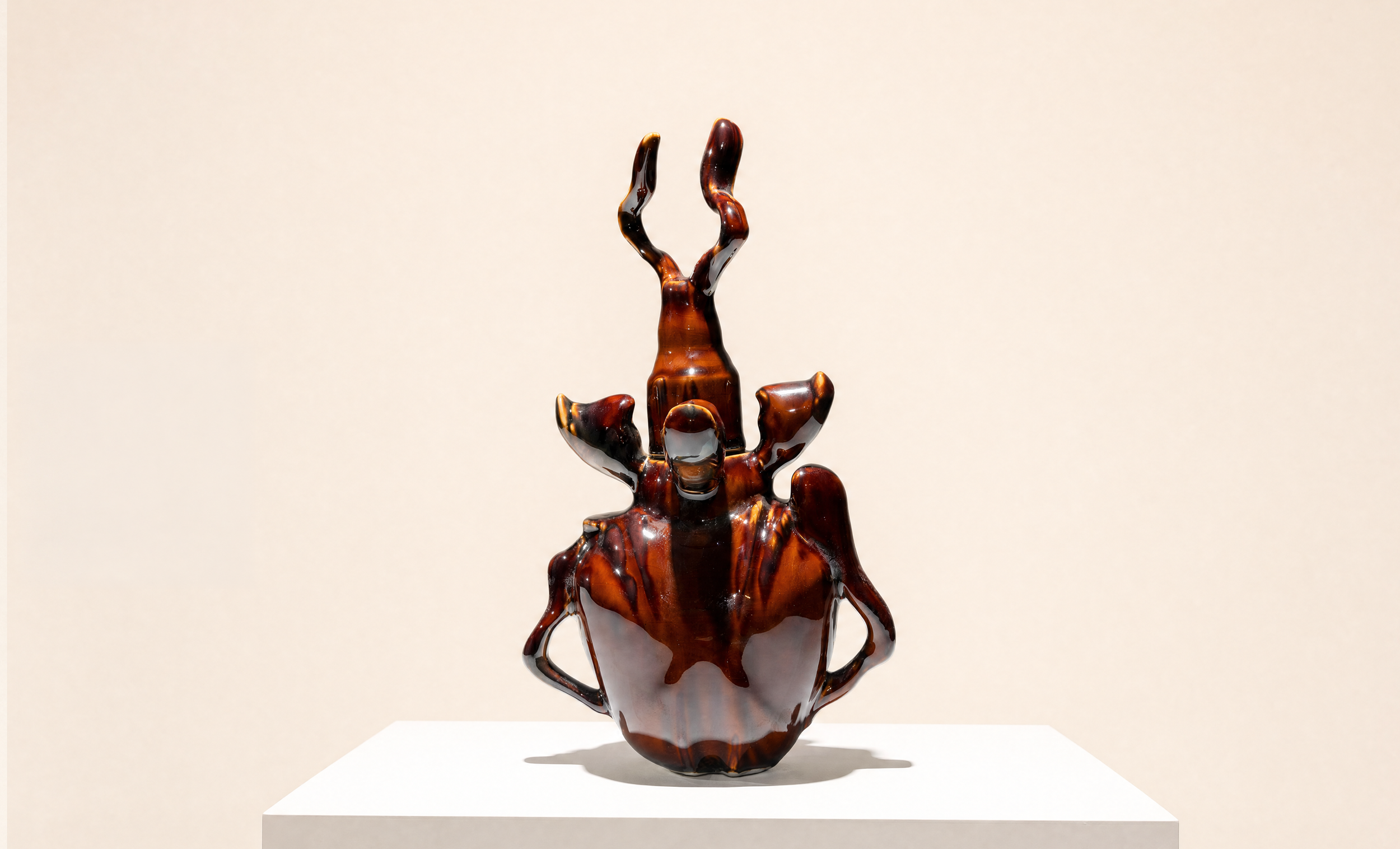
The work is made from this gap between experience and record. I begin with the impression of an object rather than a complete image of the past. Through sculpture, photography, and AI-based processes, the remembered object passes through different forms of recognition. The AI does not know the memory I bring to it. It reads forms through data: patterns of objects, materials, and public images data. What appears is produced between my partial recollection and the system’s generalized understanding.
Memory is increasingly organized through digital archives today. These systems promise preservation, but they also make memory vulnerable to copying, compression, loss, generation, and doubt. AI adds another instability: it can give an image the feeling of a record without having witnessed anything.
I use this instability as material. The work locates memory in the tension between private attachment, material trace, and computational recognition. The object carries a history that data can only approximate; the image becomes a bridge between what was lived, what can be stored, and what technology can only reconstruct from elsewhere.
The Monument
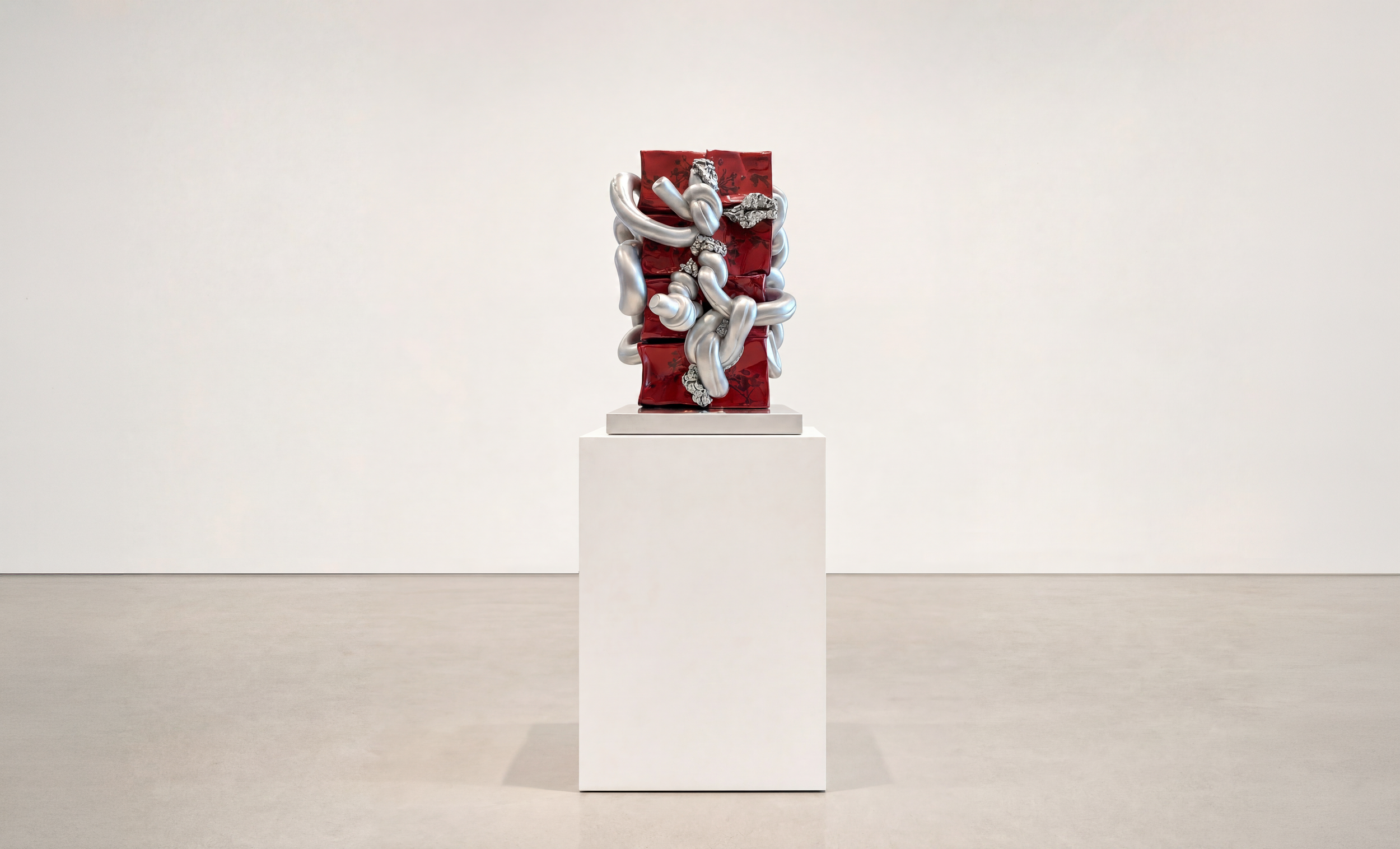
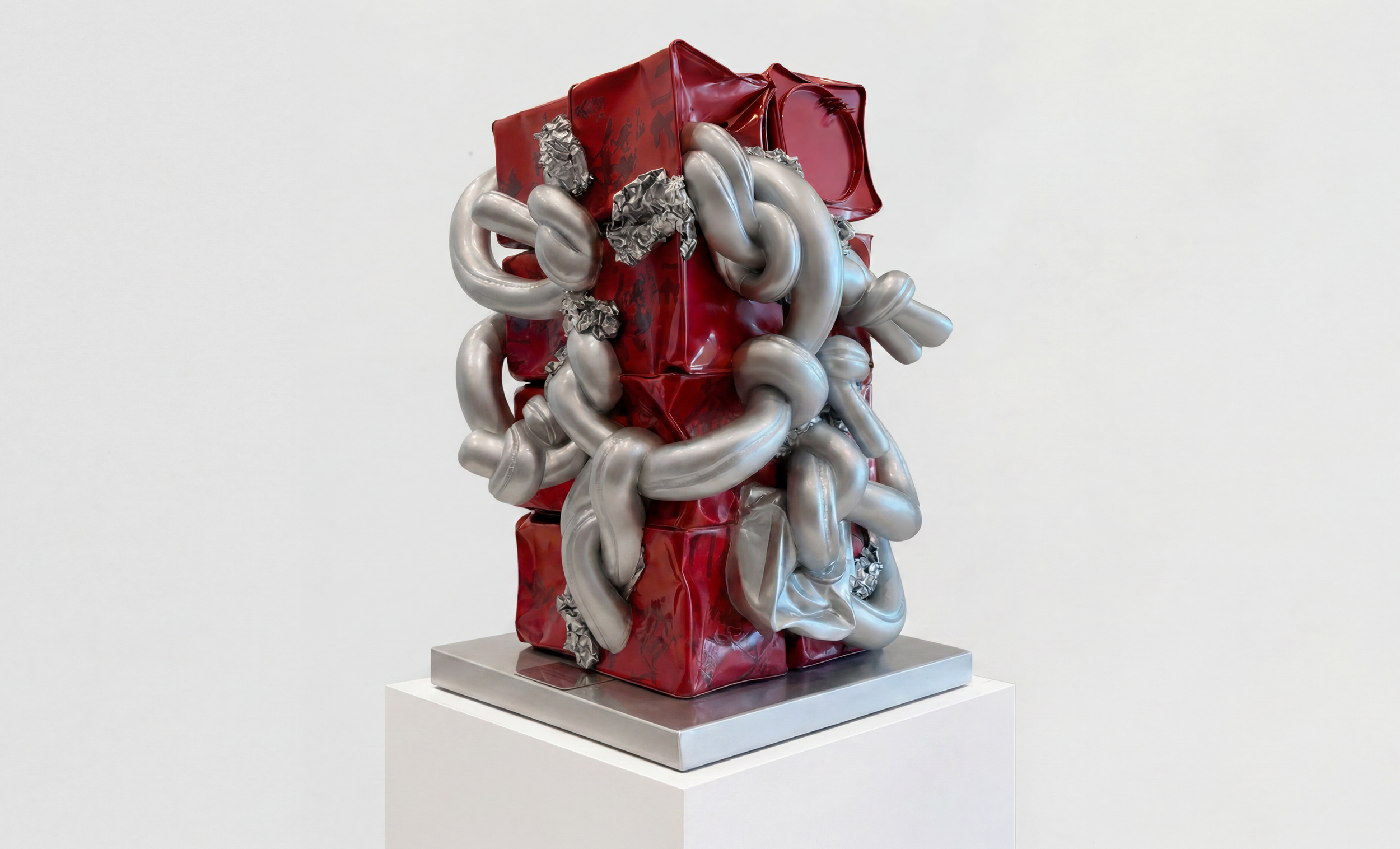
Most monuments are built at the scale of states, wars, and public history: figures cast in bronze, plaques carved into stone, structures sized for the eye to fall back from. The Monument works at a different scale. The works in this series are about twenty inches tall, made from ordinary objects. They function as counter-monuments, pulling the capacity for memorial away from public narrative and giving it to the small accumulating gestures that constitute a private relationship.
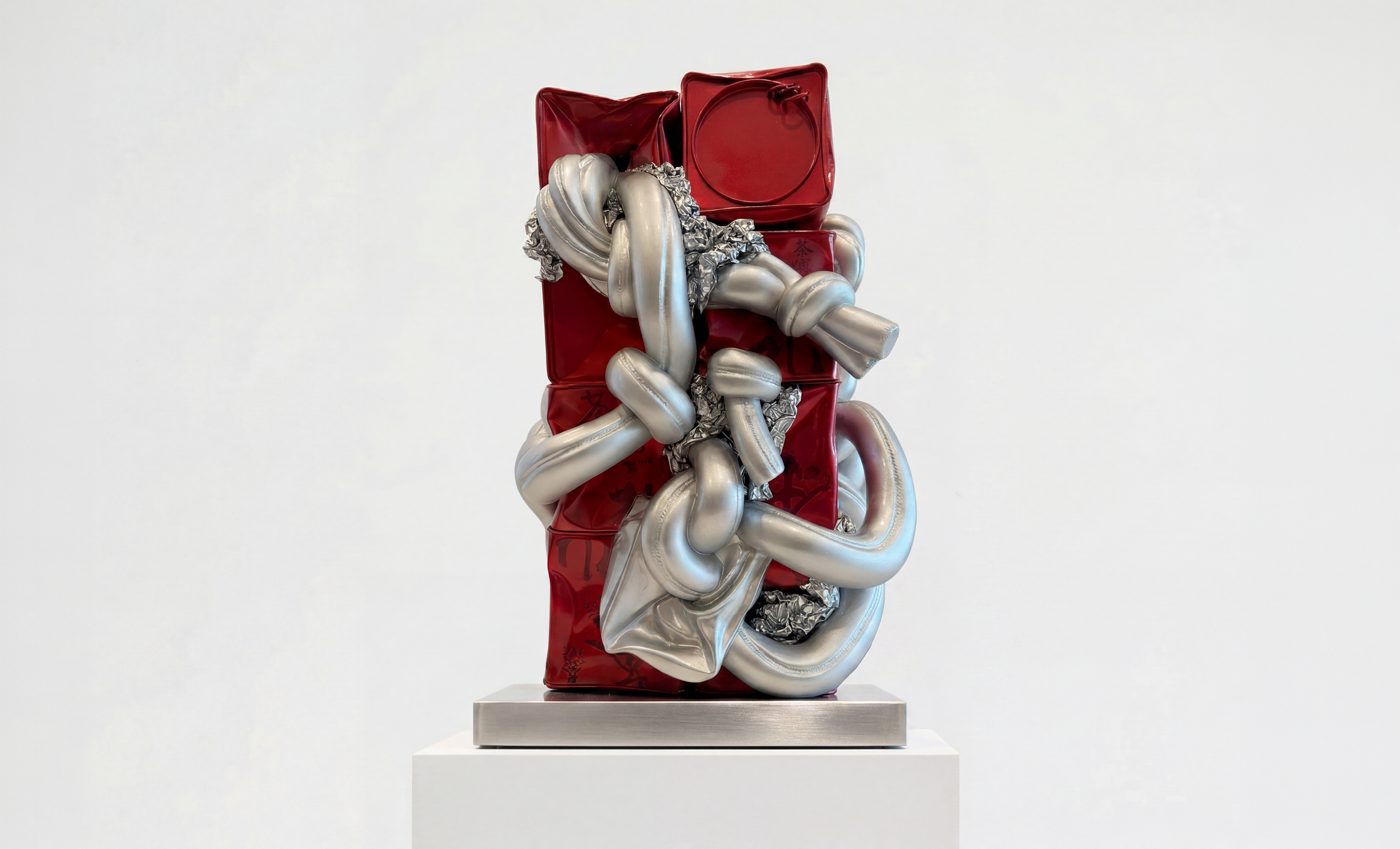
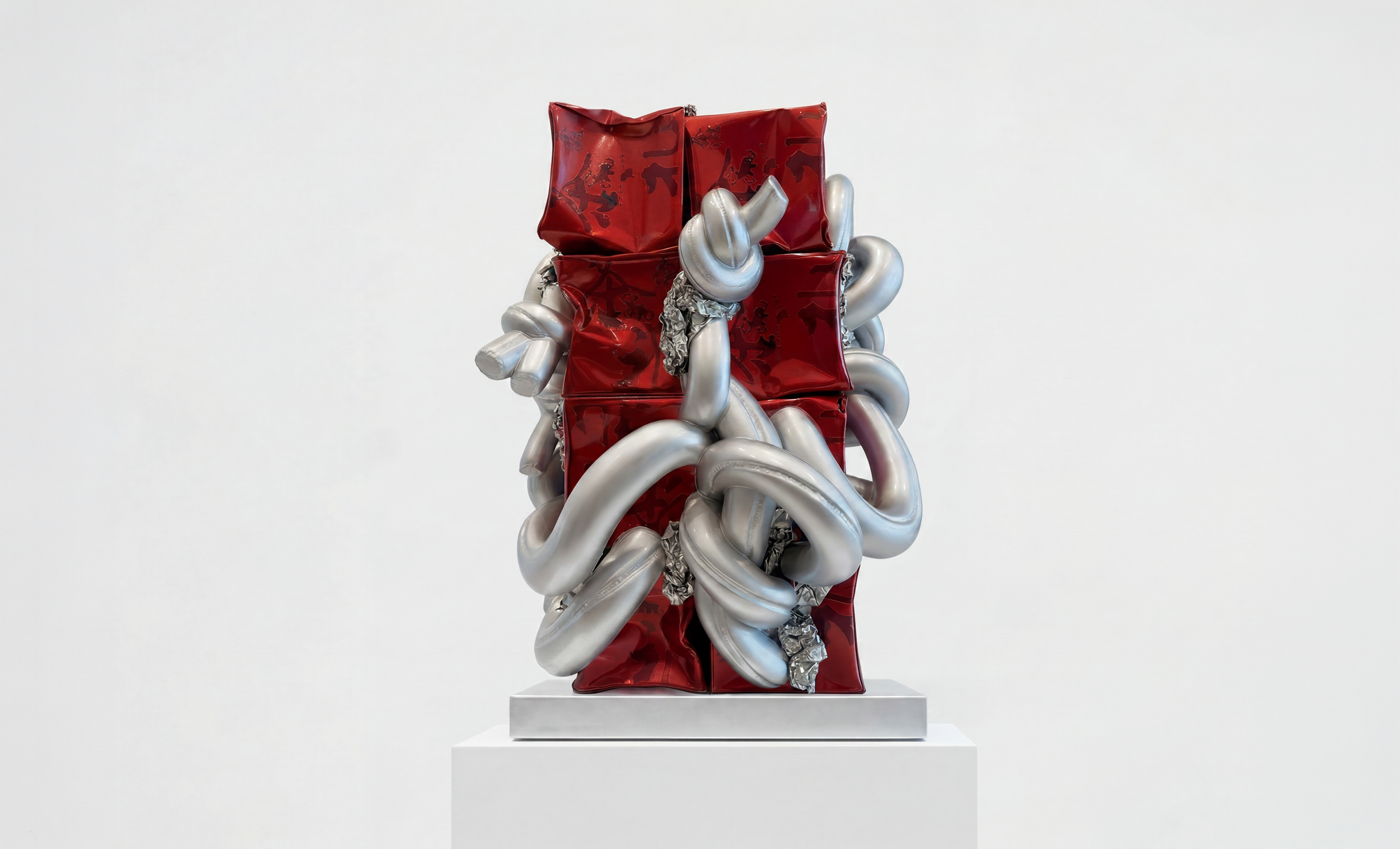
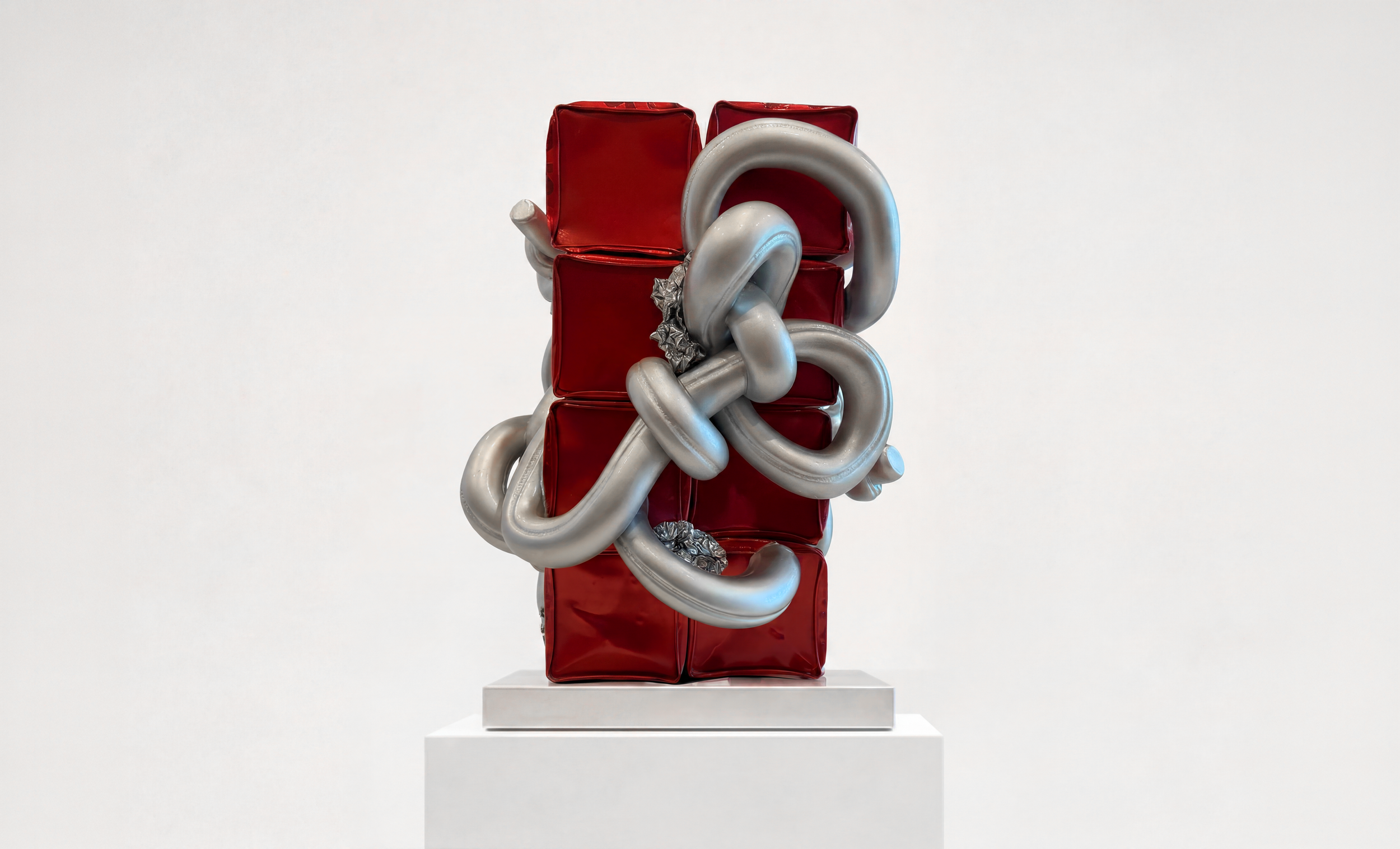
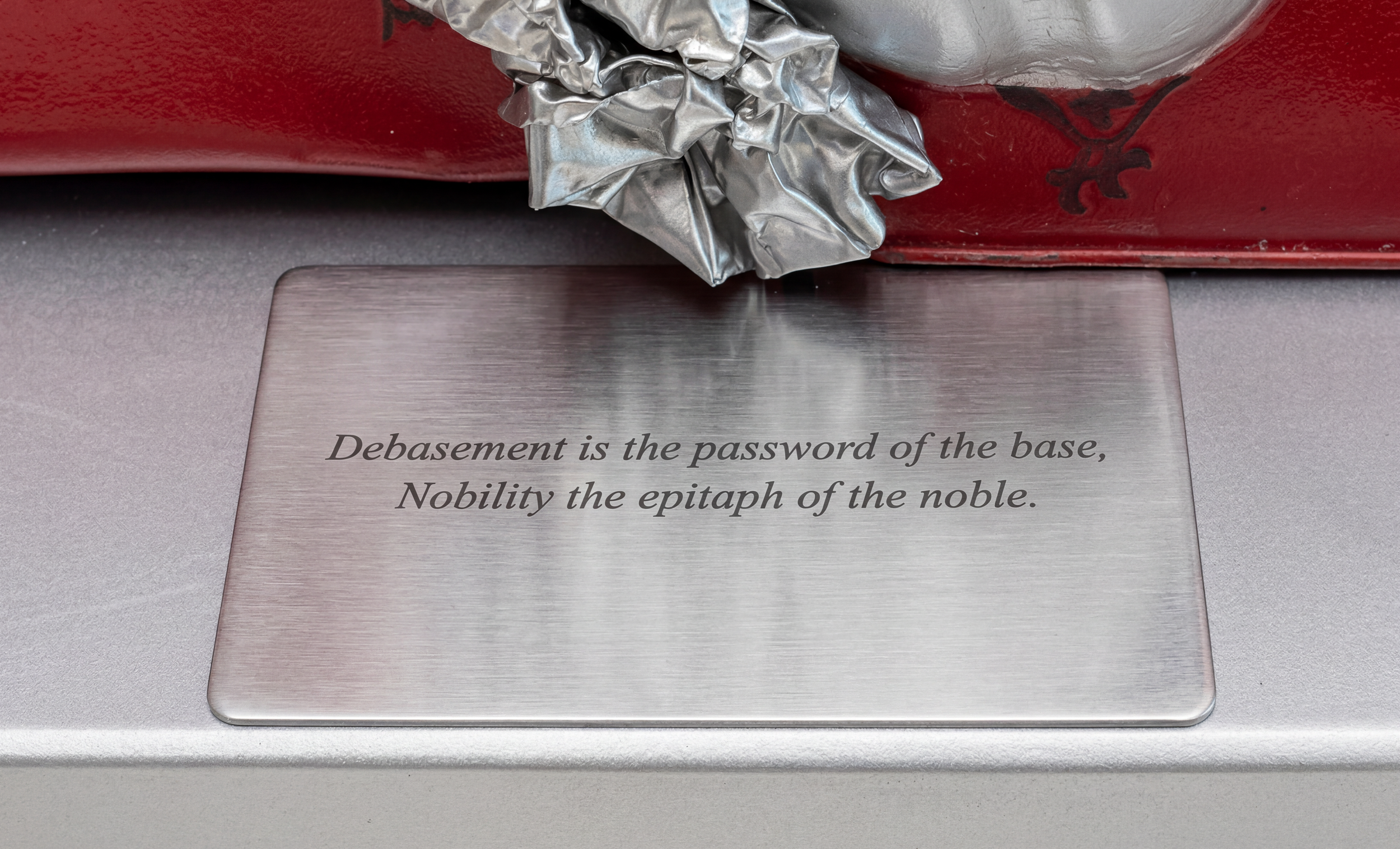
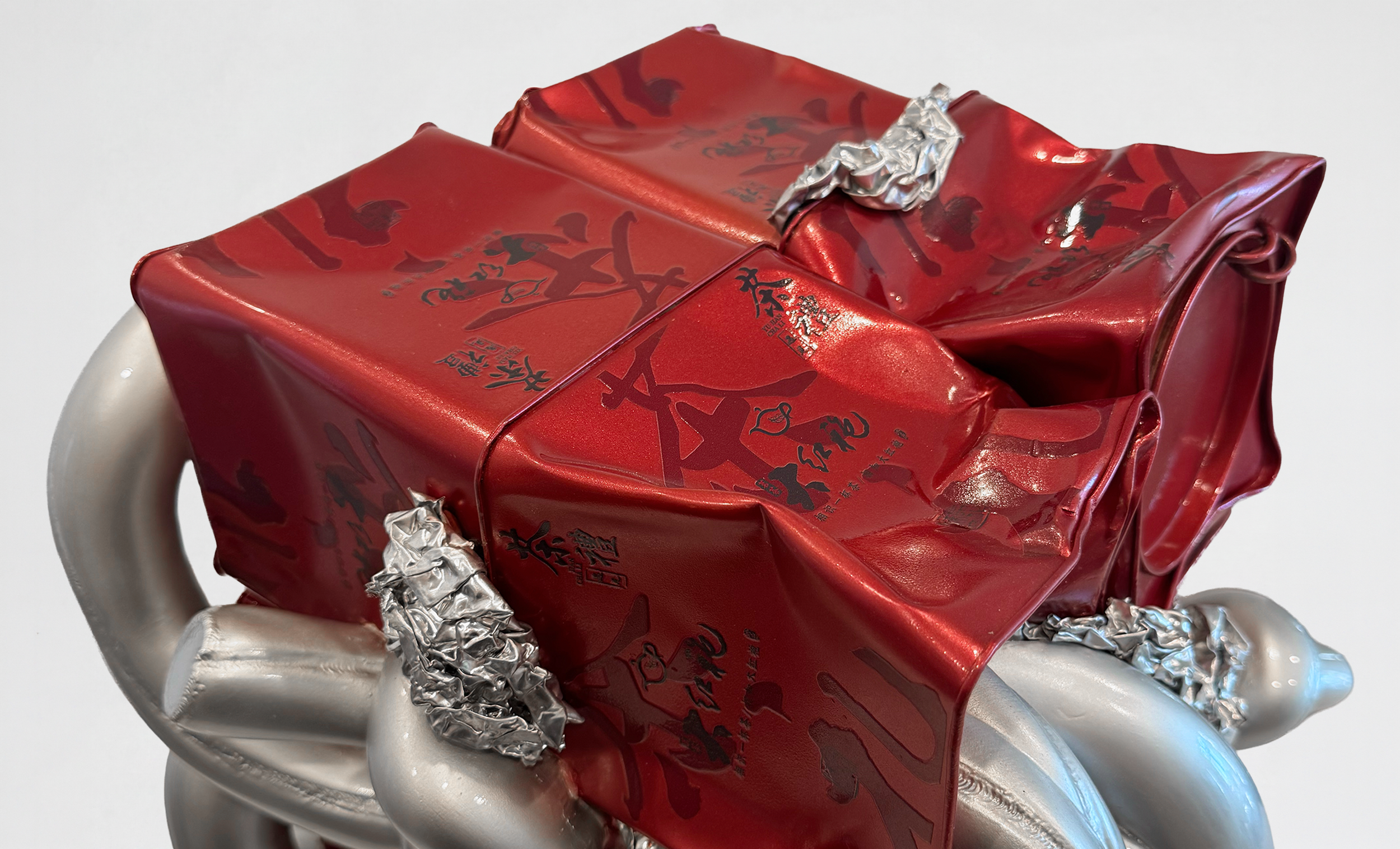
The first work begins with a red tea tin I remember from a particular period in my life. After the tea was used up, the tin was repurposed as a Faraday cage: when something important needed to be discussed, phones went inside, wrapped in foil. The everyday object's function was suspended and became a small architecture of privacy. The work consists of eight custom-fabricated tea tins stacked into a fifty-centimeter form, smaller than the originals, no longer able to hold a phone. It points back to that memory while reaching toward a future in which the gesture of cutting the signal is no longer needed, a form that refuses to resolve itself. On the base sits a plaque inscribed with a line by Bei Dao: Debasement is the password of the base; nobility the epitaph of the noble.
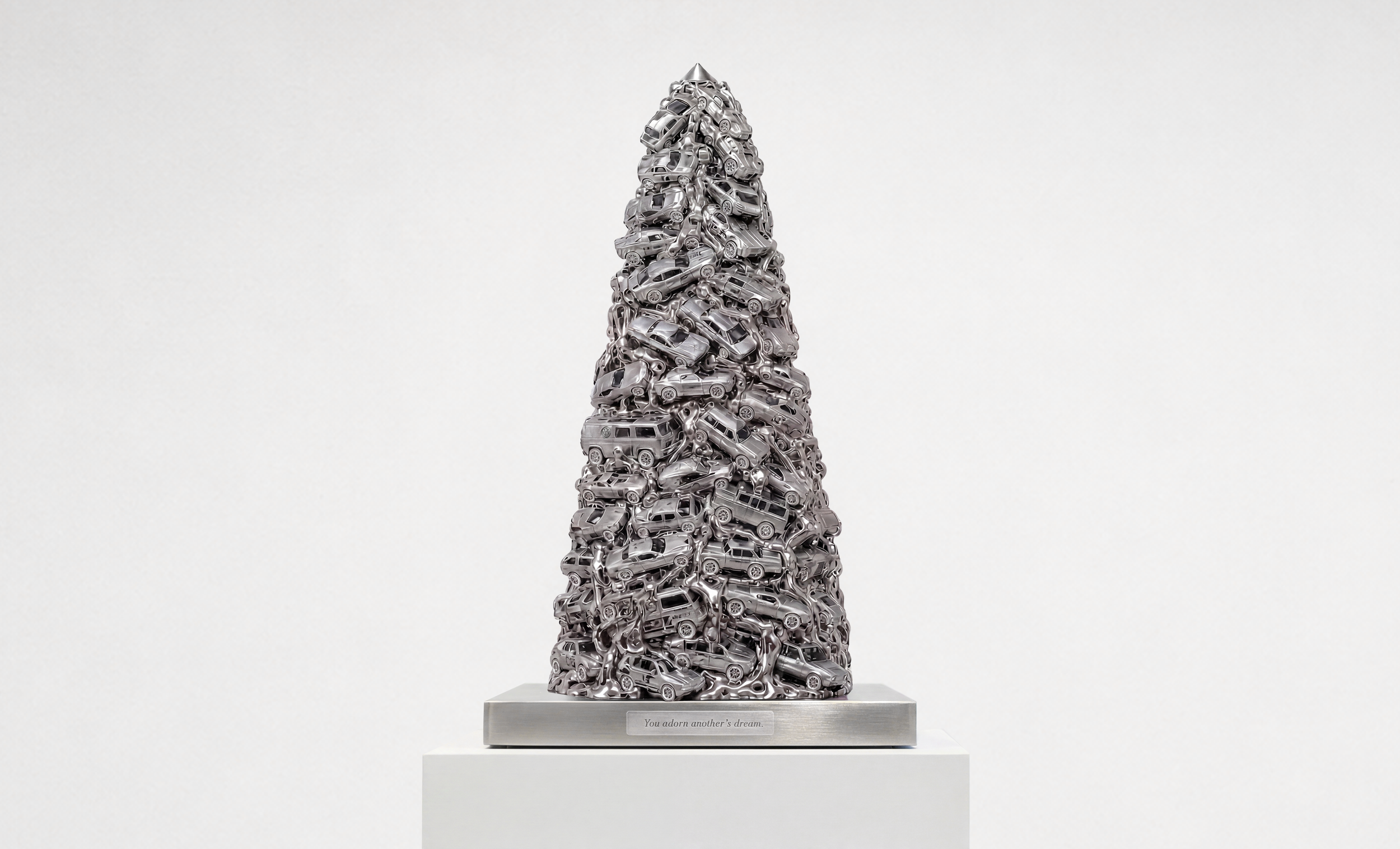
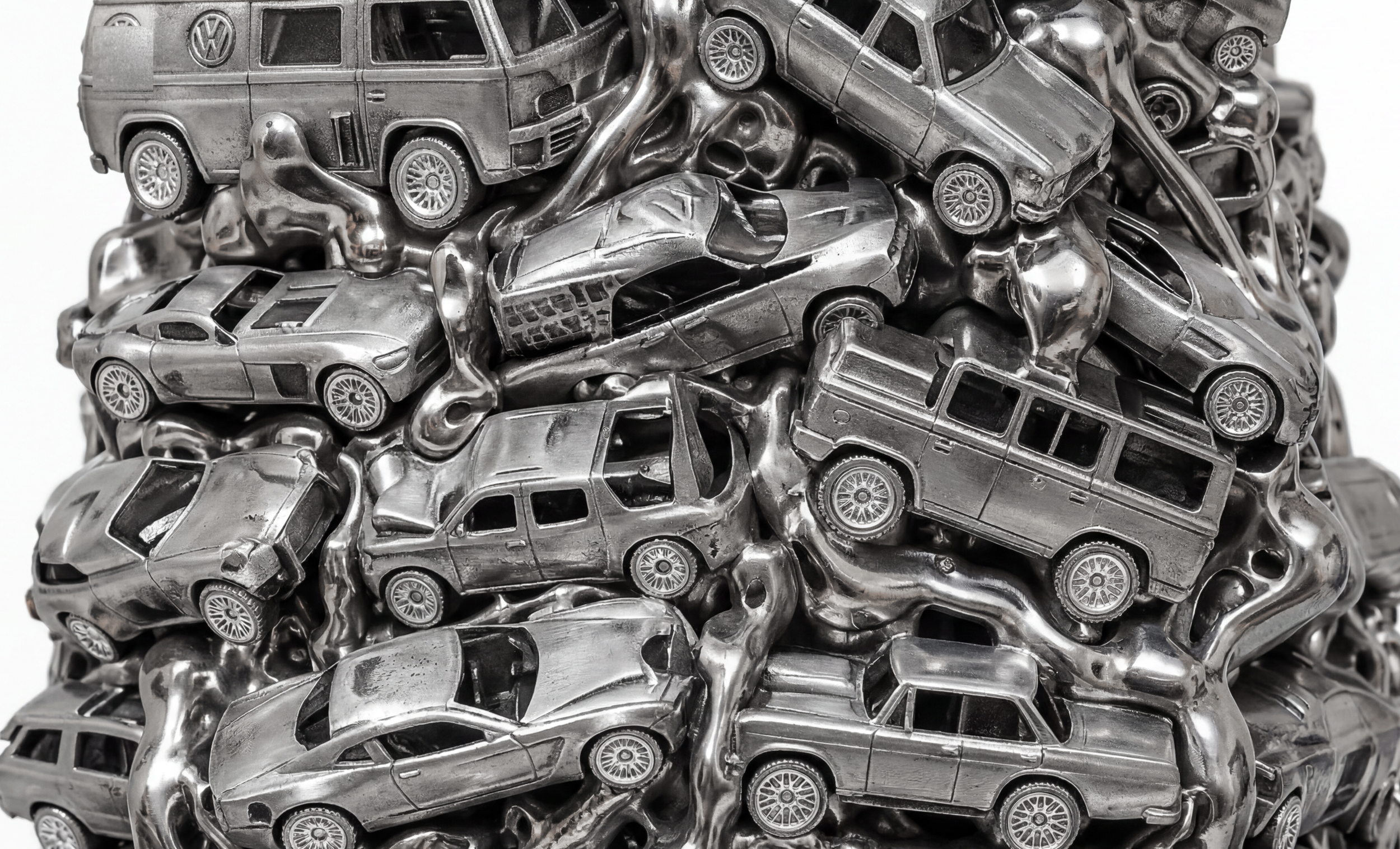
The second work is built from diecast toy cars, the kind of toys a parent buys for a child over a span of years. My parents worked long hours; we did not see each other often. Some of the cars were not even handed to me directly. They arrived with distance built into them. These toys are kept, but are not toys anymore, and outlived their original purpose long ago.
Both works ask what a monument can be when its subject does not belong to public history. In one work, a signal blocked. In the other, a presence held in proxy by an object. This monument is small, not because its subject is small, but because the things it protects belong to a private register of care that does not need to be made public to be real.
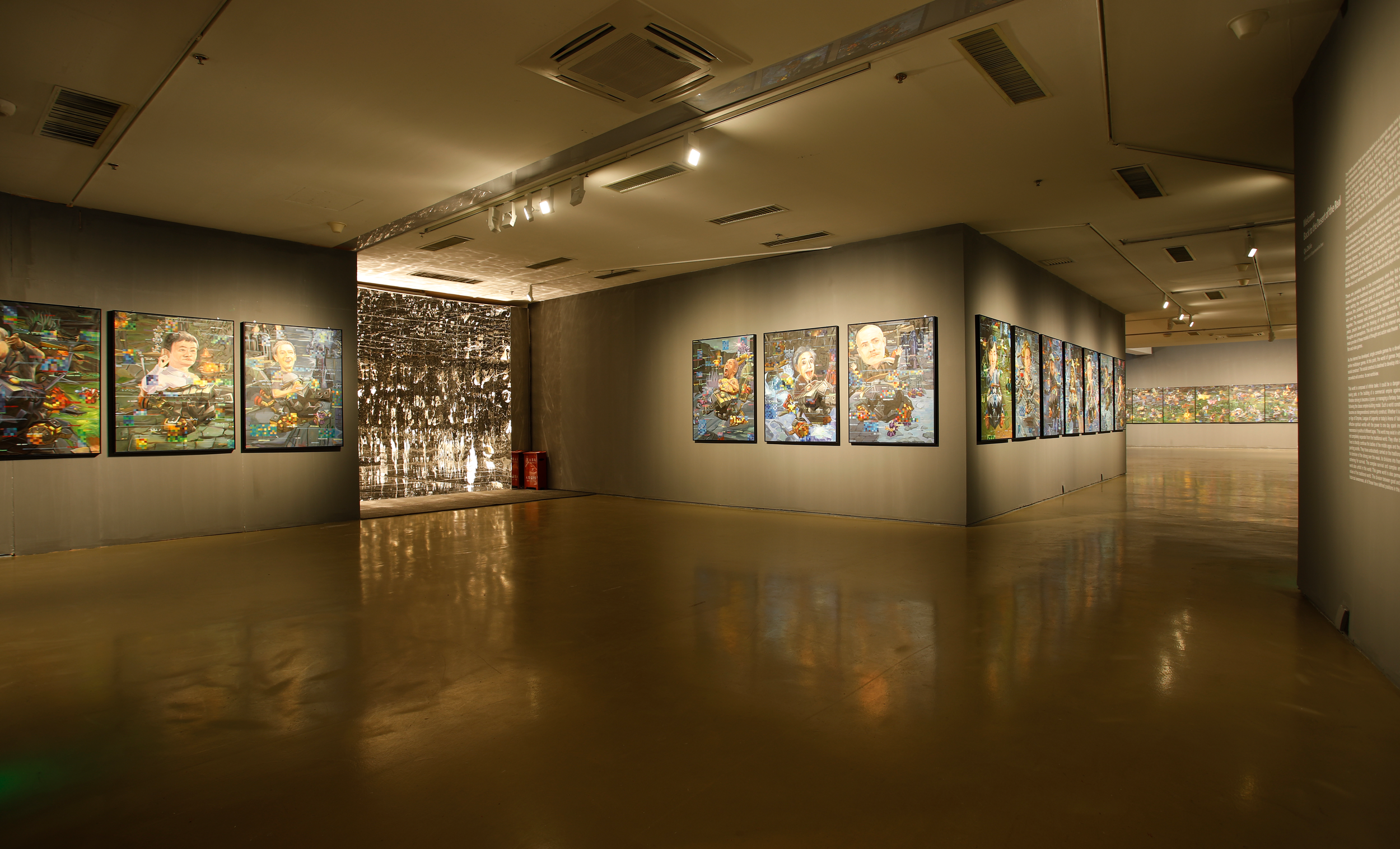
Wuhan Biennale 2022
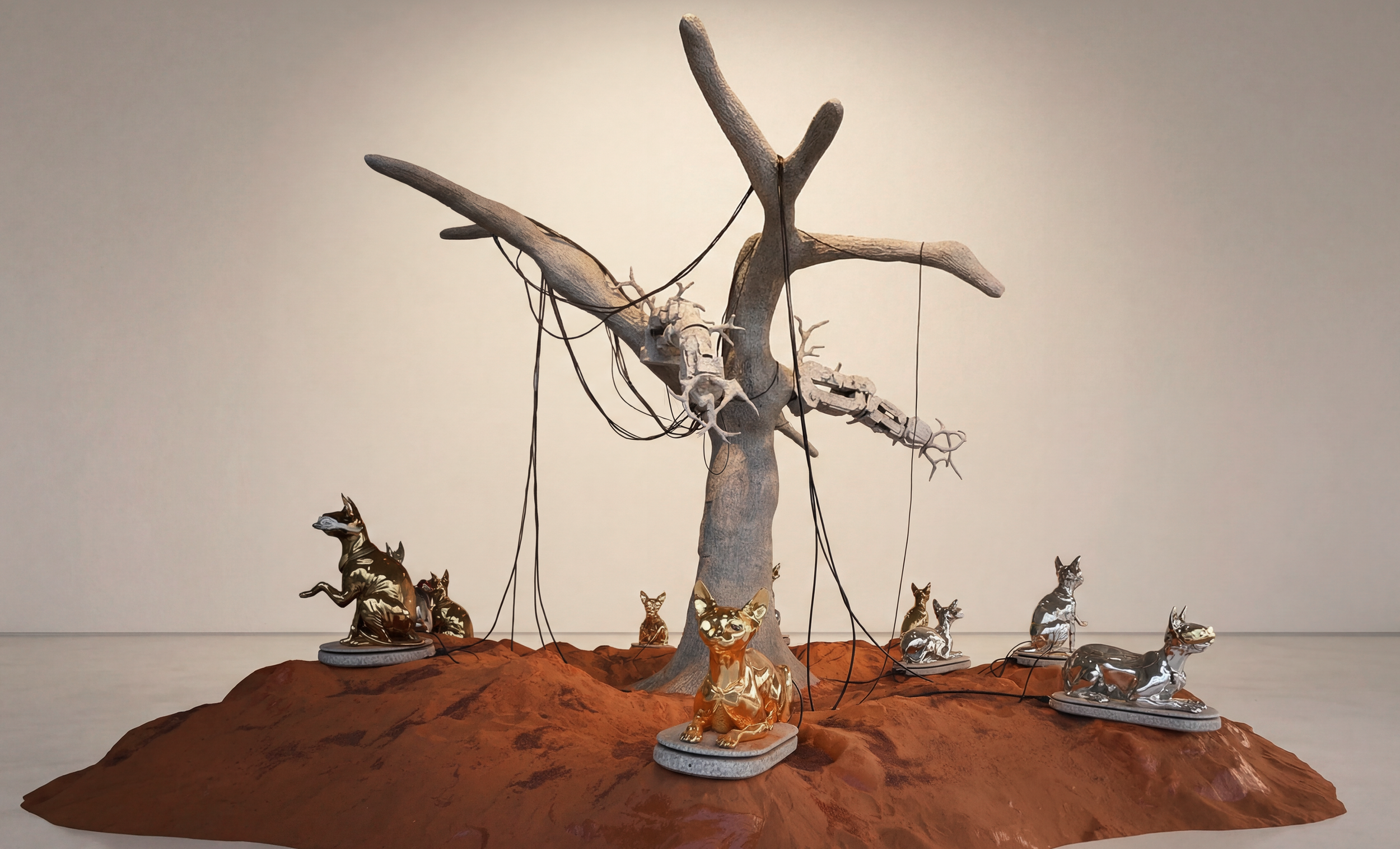
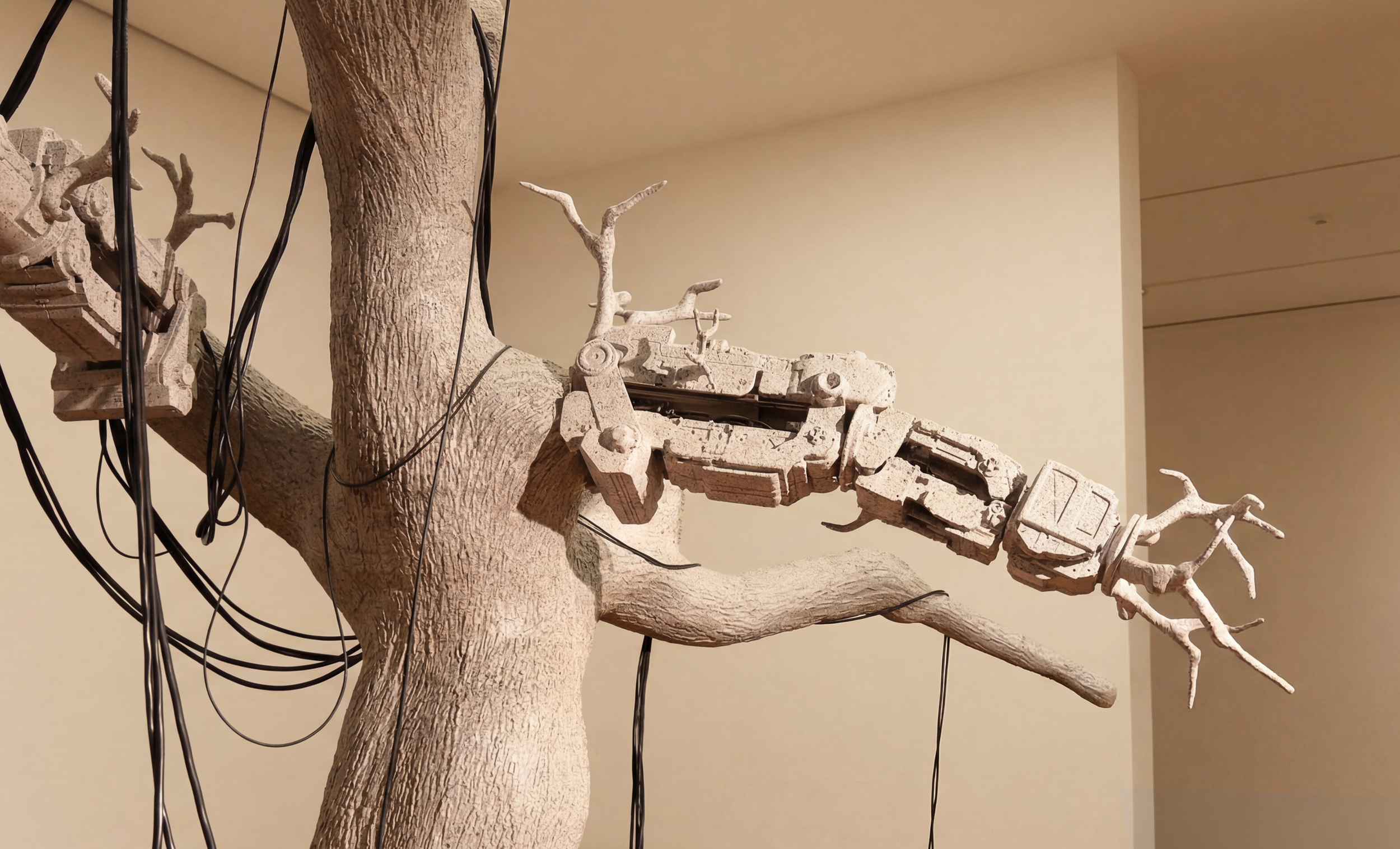
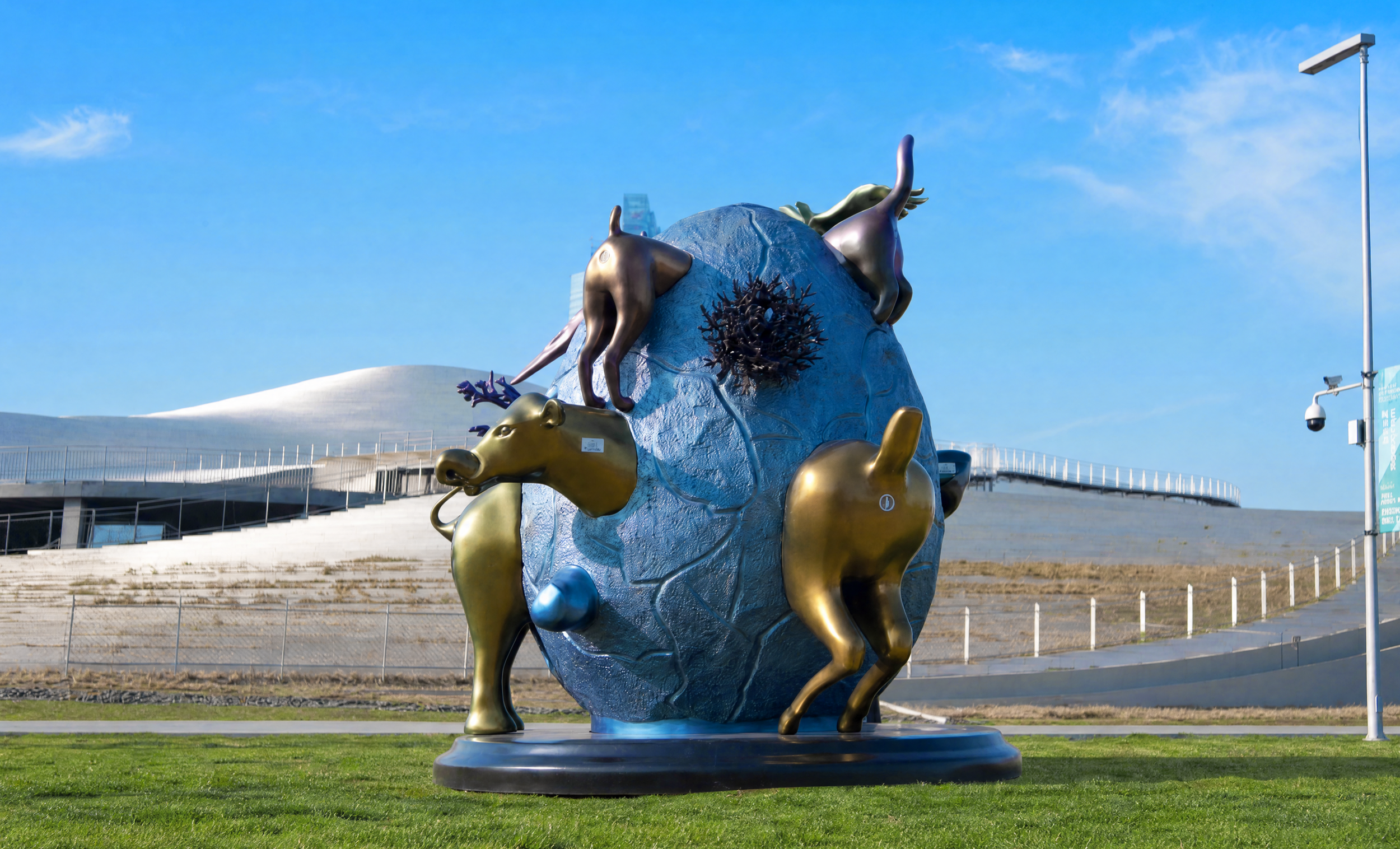
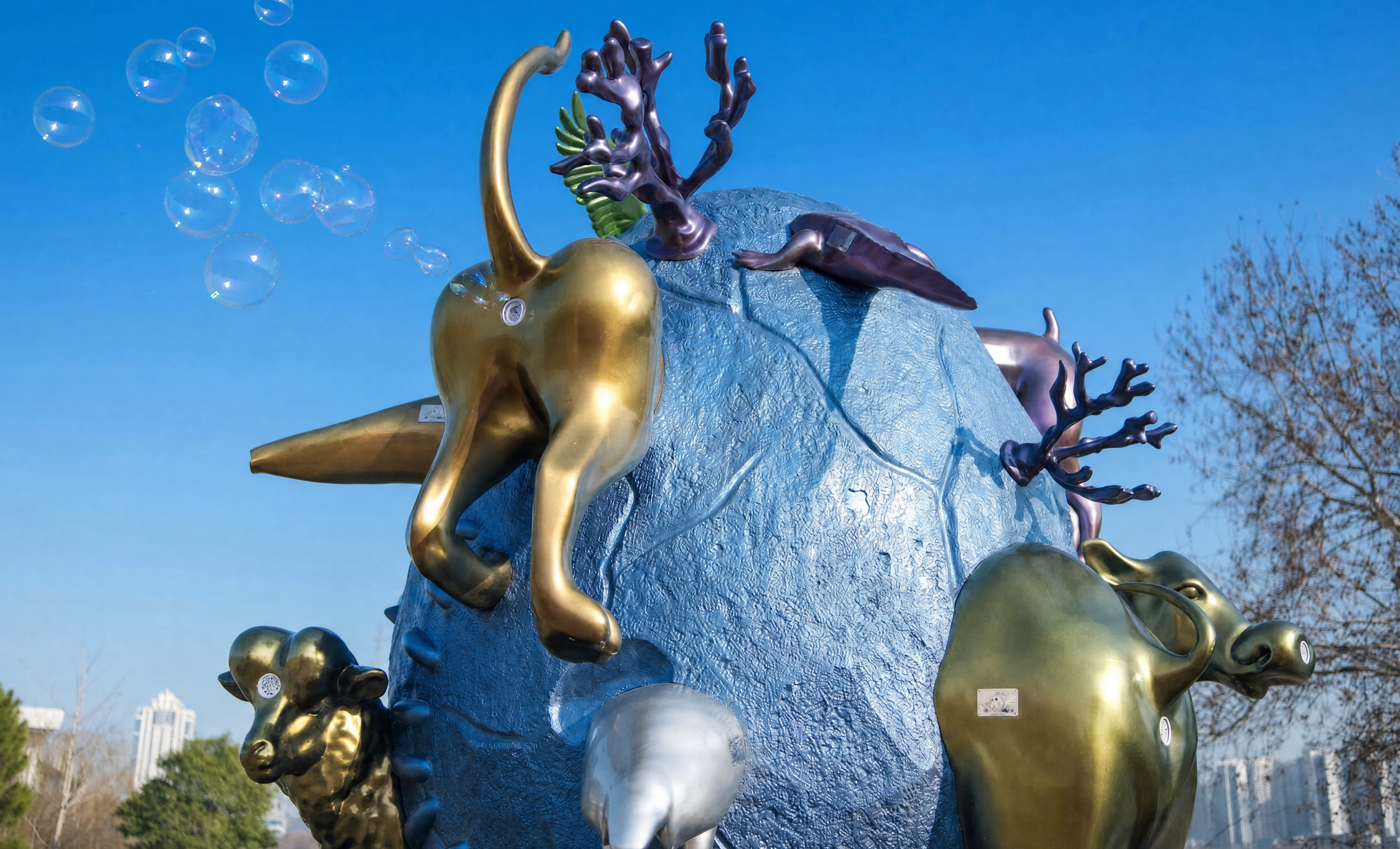
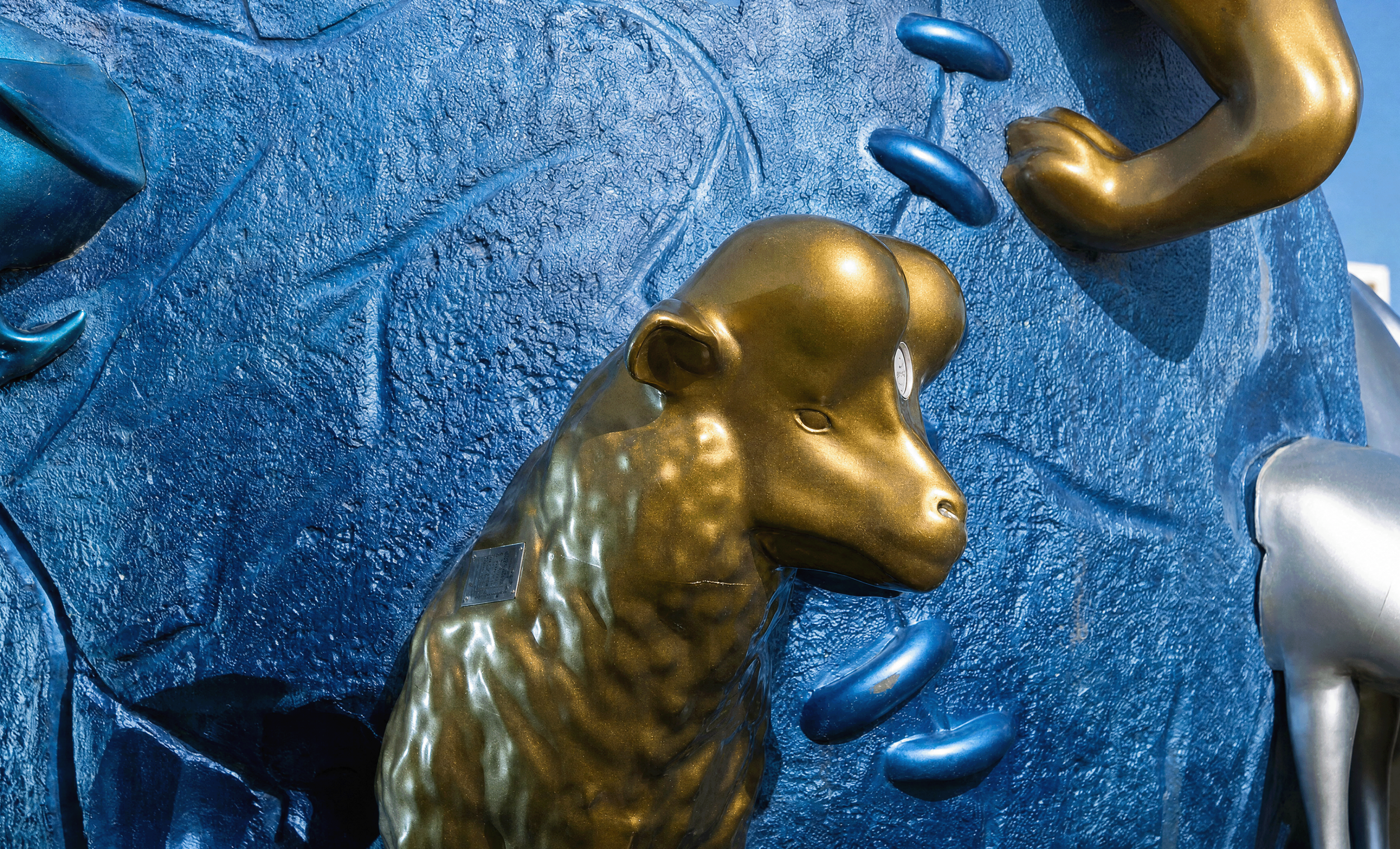
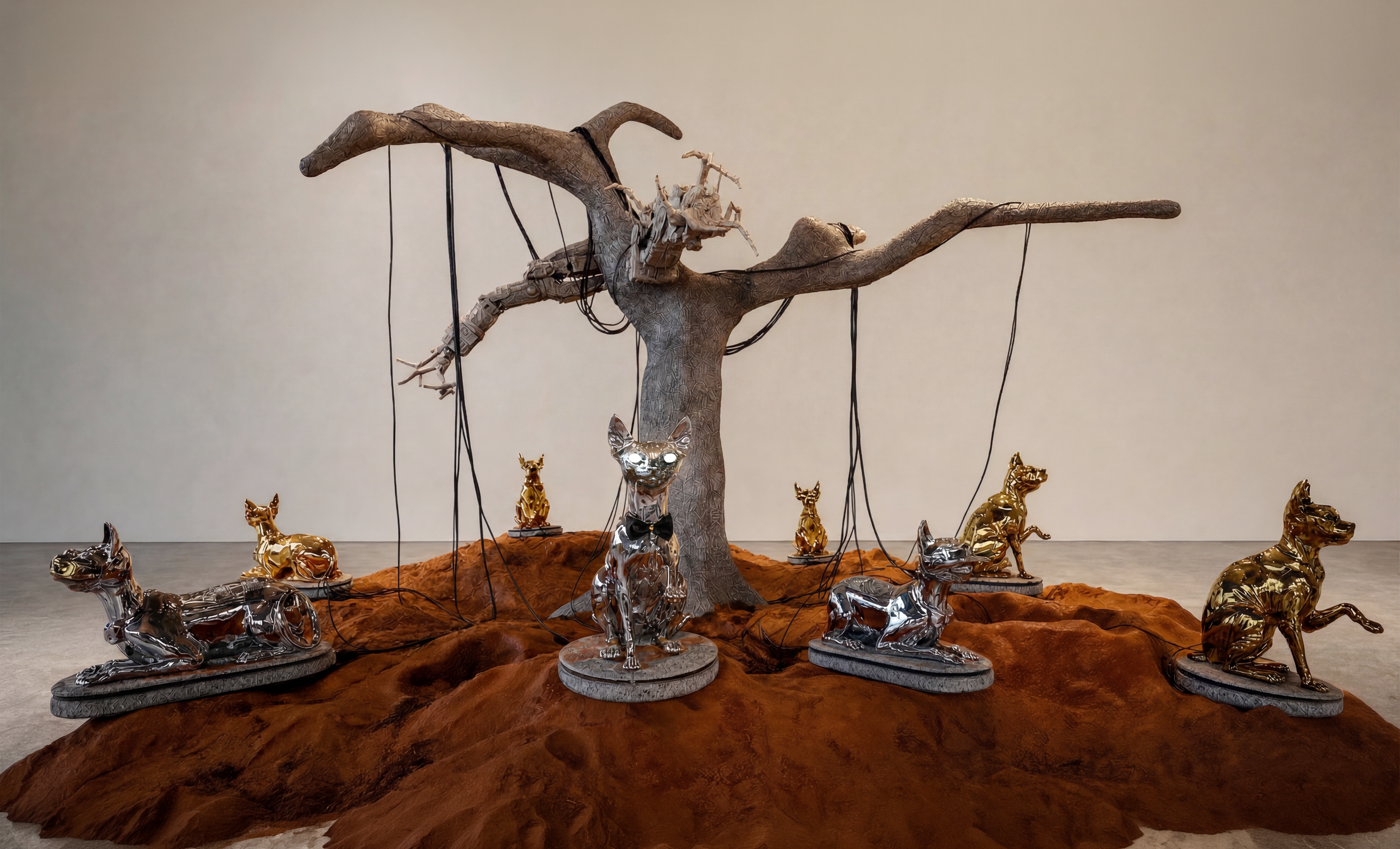
Mission on Mars and Birth are two commissioned works I made for the 2022 Wuhan Biennale at Qintai Art Museum.
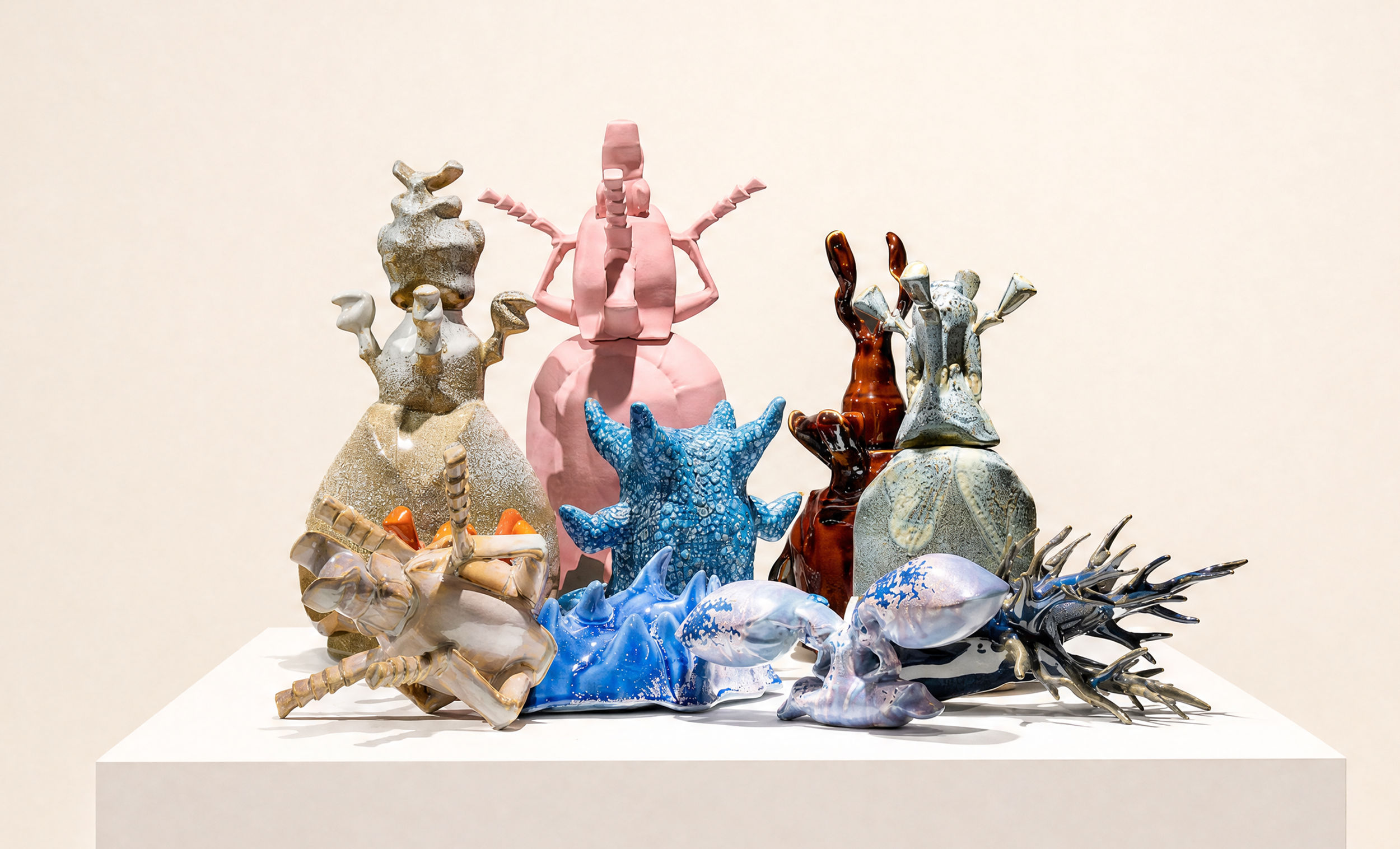
The starting point for this group of works was an observation: many characters in video games are based on animal forms, but their behaviors, biological chain rules, and physiological logic have all been redesigned. Life in games has been rewritten. I wanted to take these "reinvented creatures" out of the virtual world and into a real physical space, so viewers could actually walk into their habitats.
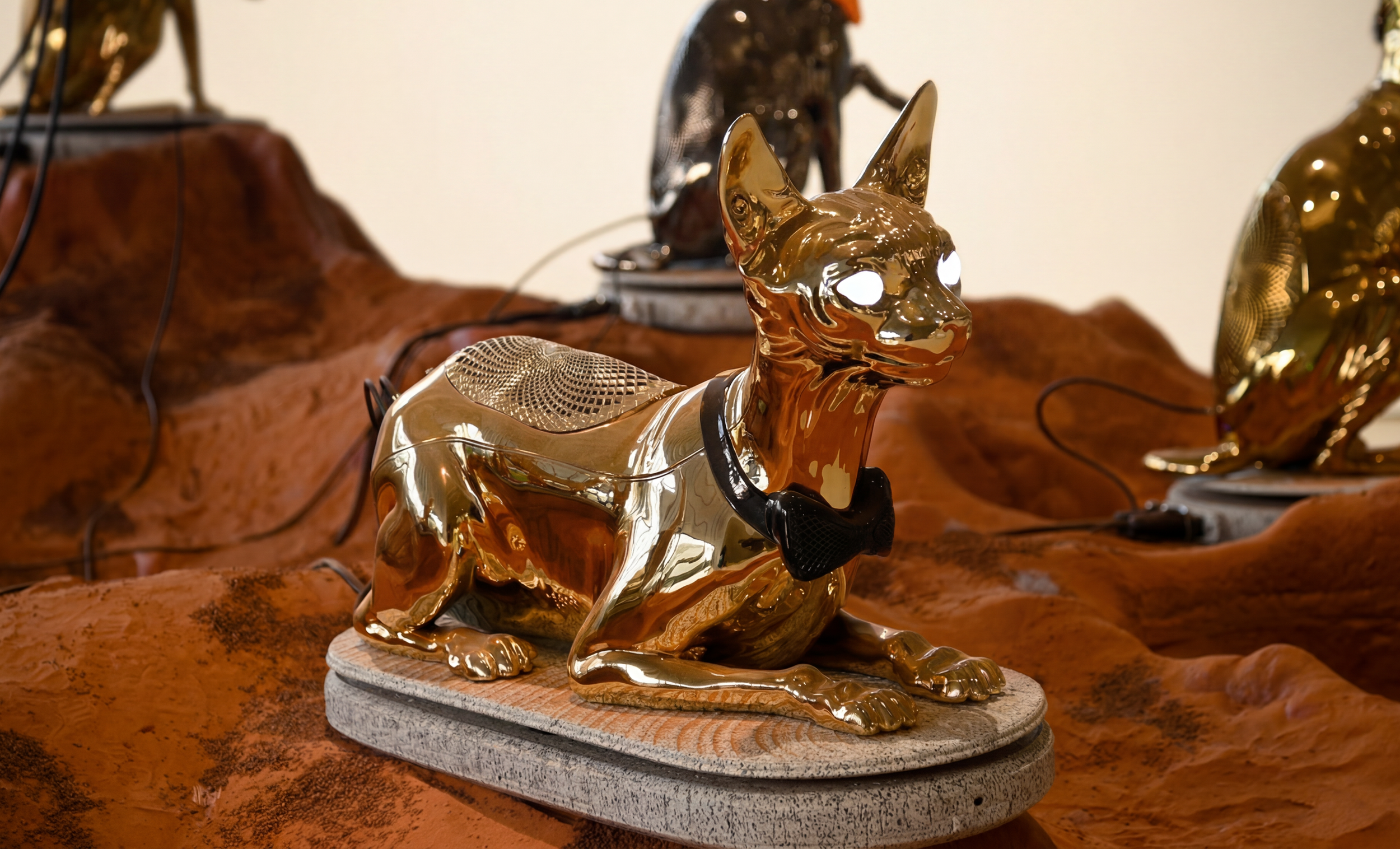
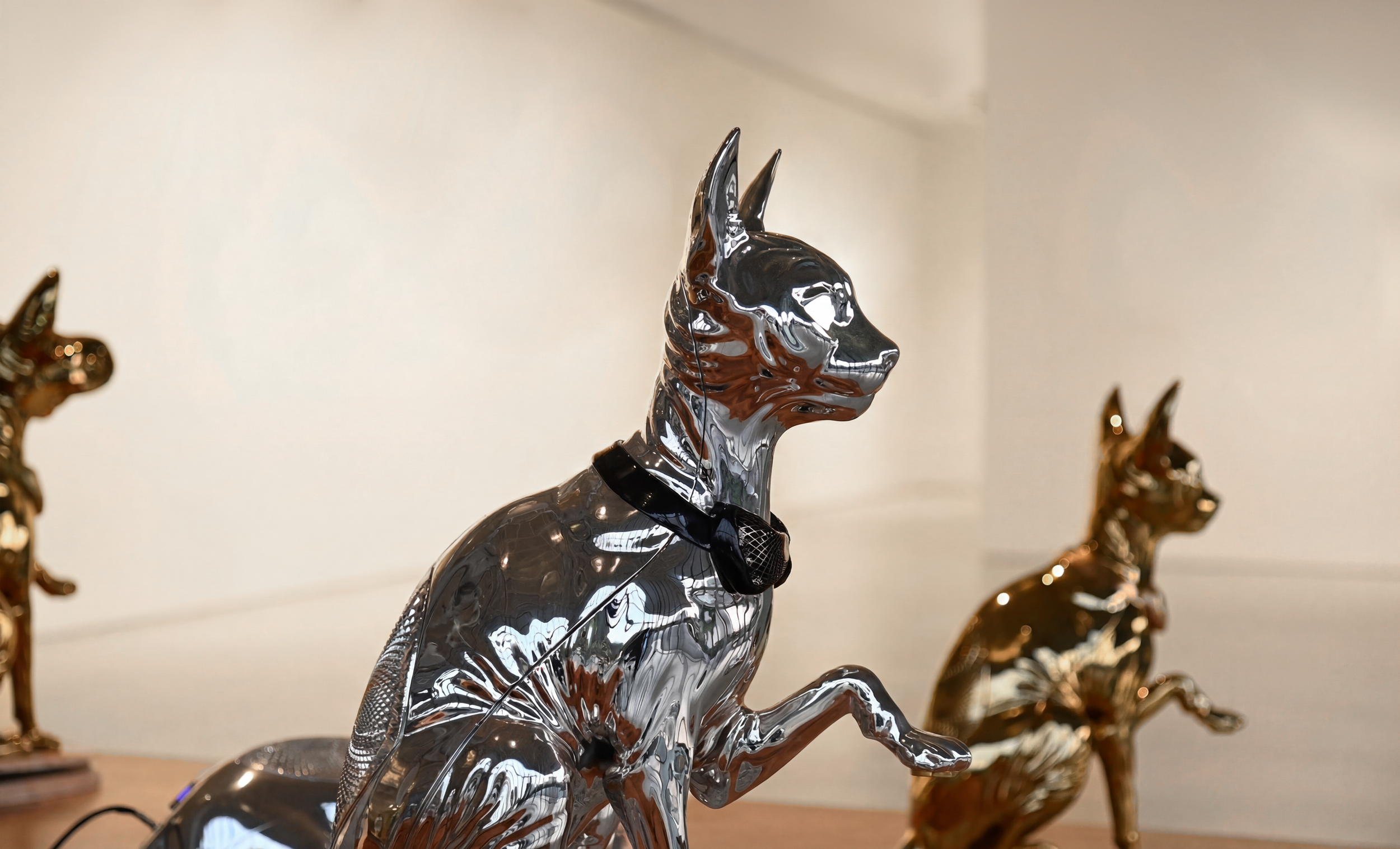
Mission on Mars extends this group of creatures into the setting of an outer-space colony. A mechanical artificial "tree" stands at the center of the space, supported by steel-aluminum arms and surrounded by sphynx-cat-shaped speakers produced by my studio; beneath it, an artificial dyed "soil" conceals embedded sensors. When viewers approach the installation, the suspended "creatures" respond with sound. It is a transplanted ecosystem on Mars, sensing its visitors.
Birth is an animal figure placed within a botanical environment. The form was modeled in ZBrush a digital sculpting software typically used to create virtual-world characters, then molded in fiberglass and structured with a steel frame and nylon. Inside, a millimeter-wave radar sensor is linked to a liquid tank. When a viewer approaches, the "creature" begins to emit bubbles from its rear: the size, direction, and sensitivity of the bubbles are adjusted in real time by software I wrote, responding to the viewer's distance and movement. Through this interaction, the work renders both the duality between the real and the virtual, and the instinctive way we respond to technological uncertainty in daily life.
Both works examine as we continuously use technology to reinvent the forms and rules of life, "nature" has stopped being a domain independent of us, something to be "protected" or "returned to", and has become a system continually edited and rewritten through our participation.